Artists
Downloads
Sep 29, 2026
Stoic: From Doechii’s Bullfrog to Cooking Up Paella

From a young age, Brooklyn producer Stoic, born Matthew Moleta, obsessively picked apart the layers of every song he’d hear. Raised on Staten Island in a music-loving household, Moleta knew he wanted to make his own music, first learning guitar, then recruiting his cousins and high school friends into bands he’d direct. His love for classic rock riffs gradually expanded into other sounds, and as a teen, Moleta developed an interest in loops and chopped samples. Over the past 12 years, Moleta has become a prolific producer, starting a YouTube channel to house his catalog of beats, which has grown to well over 1,000. That’s where TDE rapper Doechii found the track for “BULLFROG,” a minimal, scrunched-face heater inspired by some of Pusha T’s most menacing songs that helped her record Alligator win a Grammy Award for Best Rap Album in 2025. Now, Moleta makes his first major statement as Stoic with Paella, a compilation of warm, inviting groovers that features frequent collaborators LIFEOFTHOM, Mick Jenkins, and Mavi. “I think of it as boom-bap to the future,” Moleta says of his sound. I caught up with him shortly before the release of Paella to chat about his beginnings, how he established his practice, and his desire to keep things simple.

Doechii - "BULLFROG"
I understand that your parents’ taste piqued your interest in making music. What were some formative records that got under your skin?
My first love was classic and prog rock, stuff like Rush, Zeppelin, and Black Sabbath. I grew up playing guitar, and I basically tried to learn any rock song I heard. The first concert I ever attended was Rush when I was eight years old, and I thought it was so cool that they could create a whole immersive world.
When did you start playing guitar?
I was nine or 10 years old, and I was instantly obsessed; the guitar felt right in my hands. I took lessons for about two years, then branched off and started doing my own stuff. I never thought that I'd love playing music, you know? I loved listening to music, but until I took that step and started playing, I didn't realize how obsessed I really was. Other kids my age were playing sports or hanging out after school. I would come home, and my parents would always make me do my homework at the dinner table before anything else, but right after that, it was three hours of guitar every day.

Stoic feat. Mick Jenkins & Kaicrewsade - "UP & AWAY!"
How did learning an instrument change the way you listened to music?
Oh, it was everything. As a kid, I heard things as a big wall of sound coming at you, but when I learned guitar, I specifically tuned in to the licks. I was impressed by the amount of skill it took to create a riff and then actually play it, especially while singing. I wouldn't say I know a ton about music theory, but learning a bit about how songs are, in a sense, written with a formula was really interesting. There are only so many notes you can use and so many patterns, but the fact that there are such confines and people are able to make such wildly different sounds from those notes has always amazed me.
Maybe a year after I started learning guitar, when my cousins would come over to the house, I would force them to pick an “instrument”—which was like a shoebox for the drums, and, I don't know, a bell if we had one—and we would record songs. I had this little USB microphone that plugged into my iPod Video, and we would record one instrument, upload it to iTunes, play it through the computer speakers, and then track another. I didn't have a computer at that time, or GarageBand wasn't extremely accessible back in 2008, or whenever it was. I knew I wanted to make songs, and I knew how they wanted to sound. I didn't have the tools yet.
I understand that things really changed when you went to an Apple Store summer camp and started learning GarageBand. What was that experience like?
I was probably 11, if I had to guess, and my mother was looking for ways to get my brother and me out of the house. She saw that the mall near us was hosting a free Apple Camp for a week or so. They basically let us roam wild and check out some of the programs. There was iMovie, GarageBand, and a couple more, and I obviously gravitated towards GarageBand. I remember making my first beat on a DAW. That Kevin Rudolf and Lil Wayne song, “Let It Rock,” was pretty big at the time, so it sounded like that, kind of a rock-rap beat. I remember that being so much fun, and thinking, “I don't know how I could do this at home, but I want to.”
The real catalyst for learning how to record was being in a band in high school. Maybe I'm a control freak, but I did like having a little bit of say in every aspect, and I also thought the final product was really important, even though I knew no one would hear it. Whenever we had to record, we went to a studio, which was very costly. That was another reason I wanted to learn to record, but I didn't really know how it would work. I had to make sure it sounded right, and after a while of telling the bassist and drummer what to do, we ended up breaking up. I thought to myself, "I could probably do this all on my own. Let me figure that out." Right around that time, I serendipitously discovered Maschine and fell back in love with producing, but at a slightly higher level than Apple Camp. A few years later I found out about Ableton, and then I was off to the races.

Stoic feat. Blvck Svm & Max He - "PEGAO"
Was there a specific moment where you decided you were going to make hip-hop beats?
Yes, definitely. I was about 17 years old and was on YouTube one day. My girlfriend had just broken up with me, and I was looking for something to fill my time. I saw this video of Tha Bizness showing how they made the beat for Kendrick Lamar’s "Sherane a.ka. Master Splinter's Daughter." I always loved that beat, and when I saw the process of making it, I thought it looked like a lot of fun. That was when I realized it was something I could try out. The video was an ad for Maschine, so I got the Maschine beat pad, and that turned into another iteration of learning guitar, where I was obsessively learning it for many hours a day, every day.
“I used to feel like space was almost scary, and it took a while to learn how to find the balance between being boring and leaving space.”
You’ve said your main workflow is chopping up samples on your computer keyboard. What is it about the keyboard that you like so much?
I've been doing it for so many years now, and I love that everything I need is right here in a little box I can take with me anywhere I go. I like the feeling of being boxed in musically and not having a million options, because the paradox of choice is very real. If you can't simplify your workflow, you might not even finish tracks.
Stoic feat. Blvck Svm & Max He - "PEGAO"
What do you do to box yourself in when you have the infinite possibilities of a DAW?
You're right, Ableton is the perfect DAW for a maximalist. But for me, I made a collections tab with all my favorite plugins, sounds, and VSTs—I call it my GOATs tab because it’s my favorite shit. It's my go-to. I have around 20 things in there, and maybe once every six months, I'll add something else there to keep it fresh. This is where I live, and I know that using these tools can get me to the end result efficiently. I think what keeps my stuff feeling fresh, fun to make, and sounding a little different each month is the range of music I purposefully listen to and my overall mood. A lot of it depends on the phase I'm in; maybe it's winter, and I'm feeling more like making gritty, darker boom-bap, and then the summer rolls along and I want to whip my guitar out and make some Steve Lacy stuff.
We talked about classic rock as a formative influence. What specific hip-hop producers were as foundational?
What really got me into hip-hop production was early Odd Future albums, early Kendrick, and Joey Bada$$. Between those three groups, I couldn't get enough. The first producer I actually knew by name was MF DOOM, who's maybe not as well known as a producer. I fell in love with his Special Herbs collection; all those beats were so fucking weird and creative. I actually forget whether I learned about Joey Bada$$ before MF DOOM or the other way around, because Joey used some MF DOOM production on his 1999 album, which was huge for me, as a teenager in New York. Through DOOM, I learned about Madlib. I loved Tyler, the Creator, especially his production, early on. I thought I really gravitated toward guys with colorful production styles, like great chord progressions and wacky sounds.

Mavi - "too much to zelle"
How do you bring color into your own productions?
Everything is a balancing act in production. I love having hard-hitting, gritty drums with a deep bass tone, and then I put that here. [Stoic holds his hands in the air to signify placing the sounds within the stereo field.] The other side is all my stuff that's flying around up top. The drums and the bass are the anchors that are keeping you down, and the other stuff is balancing it, but also accentuating the stuff that's happening down there. The middle is where the vocals live, so I like to keep that section open. For color, some of it is texture, and some of it is the specific way that I mix tones.
There’s an openness to your beats that I really like; they often feel dimensional, like a room I can walk around in.
I love that you say that because—it must have been at least seven or eight years ago—early on, I got a tip from someone, maybe a YouTube video or whatever, but they said that when it comes to mixing, you should try to replicate a studio room. That made so much sense to me. The instruments and musicians aren't all sitting on top of each other while recording. The mics aren't right next to each other. Most everything is in a different corner of the room, and a lot of space in the middle. As an early producer, I used to feel like space was almost scary, and it took a while to learn how to find the balance between being boring and leaving space. That's the essence of production to me.
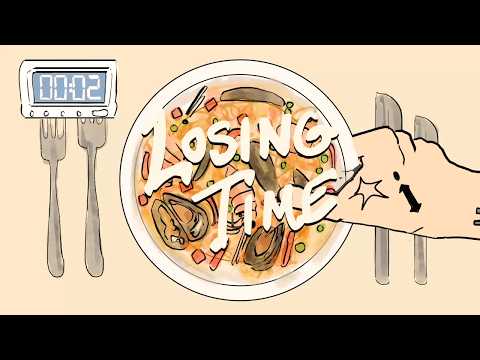
Stoic feat. Deante Hitchcock & Nina Taylor - "LOSING TIME"
How do you know when you've nailed that balance?
The most annoying answer I could give is that it's just a feeling. [Laughs] For example, my track on Doechii's album, "BULLFROG," essentially only has three elements: some hard-ass drums, a deep bass line, and some swirling guitar notes floating around. Some people would think you're out of your mind, like, “This needs more elements!” There were maybe five tracks max in my Ableton project, and once I had it down, I stood up from my desk and paced around the room like a fucking tiger. [Laughs] That is the feeling I’m always trying to get to. Once I have it, it's finished. I was happy to be right about that one because Doechii picked it up and went crazy with it, and the rest is history.
“The drums and the bass are the anchors and the other stuff is balancing it, but also accentuating the stuff that's happening down there. The middle is where the vocals live, so I like to keep that section open.”
How did the Doechii placement come about?
I'm a YouTube "type beat" artist. I posted the beat probably about three years ago, and at that time she was looking for a Kendrick Lamar or Pusha T-type beat. Luckily, she found that one. But yeah, that was literally it. She picked that up, cut a demo, and then it was after she had already announced it as the single. Her management hit me up and said, "We need this one," and I was like, "Hell yeah." [Laughs]

One of Stoic’s type beats
What appeals to you about being a type beat producer?
I didn’t set out to be a type beat producer, really. When I first started producing, I created my YouTube channel in 2016. I did it to catalog the stuff I made, so I could listen back to it on any device. So I would post a beat and call it fucking "Sunflowers" or something, and now I have it on my phone so I can listen to it. That's all it was. Type beats didn't become a thing until my algorithm started tailoring itself to beats. I saw “type beats” and was like, "Huh, what are these guys up to?" And then I saw that these producers were selling them. I'm from New York, and I have the mindset that you've got to grind, grind, grind; I was always working two jobs when I was younger, and I thought, "I wonder if I could make $20 a week extra off of selling a type beat. I'm already making them, so why not?" So, in the first month I started making sales, I was making like $50 and then $100, and it kept snowballing. After a while, I was thinking, This is a possible career, and thankfully it hasn't stopped since.
I got a lot of really good advice from my dad, who is also a small business owner, and he's the guy who's always brainstorming and thinking about how to be the best in his field. One of the best things he told me was that the blueprint for being successful is already out there. You don't need to reinvent the wheel for this thing. So, if you're trying to excel at something like type beats on YouTube, look at what the top guys are doing. I started noticing the top type beat producers post every single day at the same time of day to the minute; they're using this specific type of titling and keyword-ing, and specific kinds of thumbnails. And I essentially stole their sauce. The blueprint is there; everyone's sound is initially borrowed, but eventually it becomes your own. I'll never be able to perfectly replicate a Tyler beat, but through that trial and error, I'll find my own stuff, and that's how you get your sound.

"Smoke Break-Dance" - Mick Jenkins (Feat. JID, Prod. By Stoic)
What was that learning curve like when you first started making beats?
It was fun. I'm the type of person who'd rather not watch a tutorial; I'd rather get my hands dirty and figure it out on my own. And looking back, I'm really happy I did it that way because you come up with some pretty unorthodox techniques that can eventually become your sound.
The mistakes are how we figure out what direction we're going to take next.
Exactly.