Artists
Downloads
May 14, 2026
Download the Live Set of Artefakt’s New Track “Undertow”

In contemporary club music, impact is often measured in moments of release, like the euphoric energy of a drop after a big build-up. But within certain genres, it's the quieter details that give a composition its true presence – the slow modulations, the deliberate imperfections, the textures that shift almost imperceptibly beneath the surface. For listeners drawn to depth and immersion, those subtleties are where the real magic tends to live.
Artefakt has built a career on exactly this kind of aesthetic. First emerging as a collaboration between Robin Koek and Nick Lapien, the duo became known for their deep, hypnotic techno sound, blending ambient atmospheres with dusty, dub-tinged effects and understated pulsating rhythms. Following Koek's recent departure, Lapien carries Artefakt forward as a solo act, preserving the project's core character while gradually opening it up to new influences and techniques.
His latest EP is the first Artefakt release in this new chapter. Among its tracks, “Undertow” offers a clear glimpse into his process, beginning with field recordings made on the Greek island of Agistri before being shaped through layered processing and hands-on hardware treatment into something driven as much by timbre as by rhythm and arrangement.
In association with Crack Magazine, we sat down with Lapien to reflect on Artefakt’s origins and the production techniques behind “Undertow” – from recording and re-amping to analogue tape echo and chance-driven sequencing. To accompany the article, he has also shared the track’s Ableton Live Set, offering a direct look into how it was made.
Download the Live Set to Artefakt’s track “Undertow” here*
*Requires a Live 12.3 Suite license or the free trial.
Some third-party plugins have been substituted with Ableton devices for compatibility reasons; as a result, the Live Set may sound slightly different from the final master.
Please note: This Live Set and included samples are for educational use only and cannot be used for commercial purposes.
Hi Nick. Can you tell us how you first got into music and how Artefakt eventually came together?
I started making music around 16. I played in a band, but that quickly switched to electronic music because I was too reliant on my bandmates, who weren’t always as motivated as I was.
I studied composition and production at a faculty for Music & Technology in Hilversum. That’s where I met Robin. We started making music together in the analog studio at our school and later went deeper into production during a shared internship at the WORM Studio in Rotterdam. Material from those early sessions led to our first release on Field Records in 2012.
Fast-forward now: after 12 years, Robin decided to focus on his career as a sound designer and music educator. So that’s why it’s just me now. He trusted me to continue the project artistically under the same name. After almost 15 beautiful years together, this is a new chapter, so it’s an interesting intersection for the project as well.
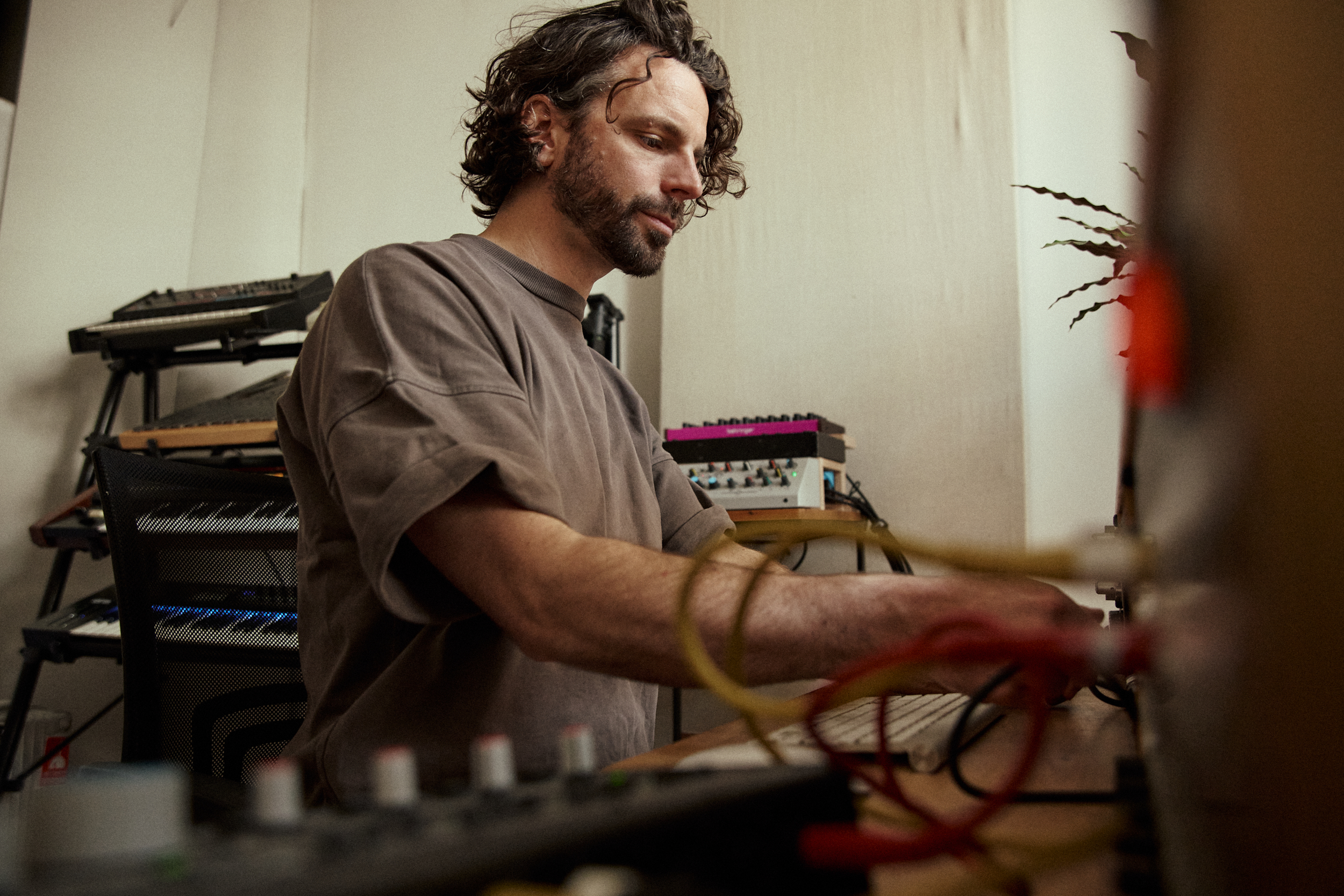
What was the original vision or ethos behind Artefakt, and what kind of emotional space were you and Robin trying to create?
Robin and I came from different angles. I actually wasn’t so familiar with dance music. I wasn’t really listening to house or techno, while Robin was really into early Detroit. I was coming more from an ambient angle. I think that combination is still the core of the project and sound.
The grooves are important, but always in combination with atmospheres, textures and harmonies. I think that’s something we both really appreciate. On a sound level, we talked a lot about timbres, modulations and subtle changes.
It’s about little mistakes, about letting accidents happen, and about the imperfections that create the sound quality that we both really like. It’s also about narratives, about creating an atmosphere through subtle changes, and telling a story rather than just having a pounding beat.
Now that you’re working solo with the project, do you feel an obligation to preserve the original sound, or do you sense a freedom to move in other directions?
I think both are true. For me, there was a decision to make about whether to continue or not. But I felt there was more music to be made within this philosophy and within this sound signature, so I wanted to continue.
That doesn’t mean it’s just going to stay exactly the same as before, because of course we both added certain elements to the project. But it does mean there will be an organic continuation sound-wise, because otherwise I might as well start a new project.
You mentioned your signature sound. What does that mean in practical terms? How might others form their own individual sound?
I think it’s an interesting question, especially now that it’s become so easy to make something that sounds good with all the tools available. In a way, that’s made it harder to create something that sounds unique.
In the past, you worked with a limited set of machines, each with its own character, and the combination of those machines and your mixer would already shape a certain sound. There was also much less educational material, so you had to figure things out yourself.
My advice would be to find combinations of tools or techniques – hardware or software – that you return to regularly. Those habits can become part of your sound signature.
For example, I often use a Vox Pathfinder guitar amplifier. It’s a cheap amp with line in and out, a nice EQ and spring reverb, and it sounds different from any plugin I’ve heard. Using something like that consistently – for example, on drum sounds – can help create a recognizable identity.
Ultimately, it’s about building a connection with certain tools or techniques that shape your sound.
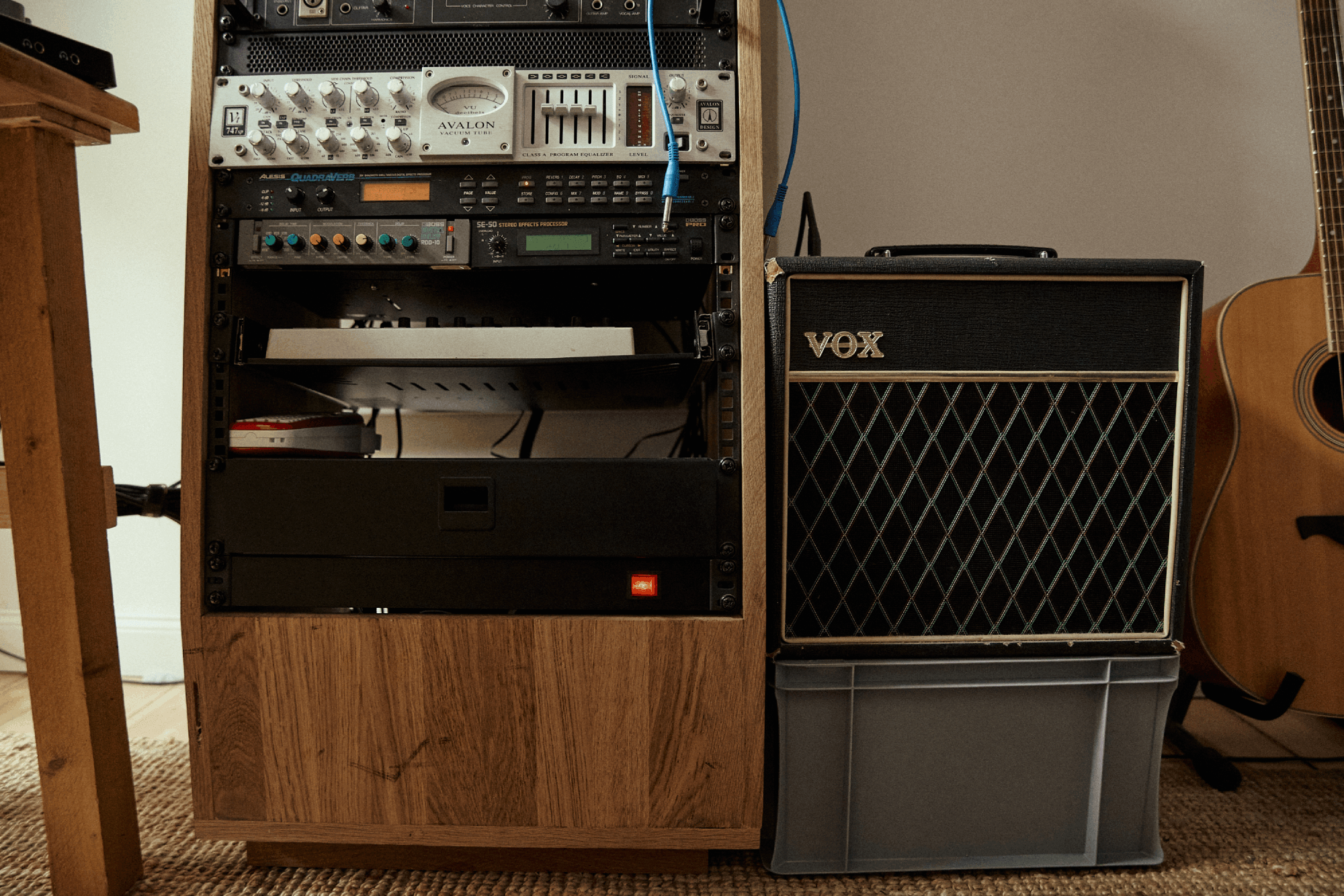
Beyond the choice of tools, does the way you interact with them matter as much as which ones you use?
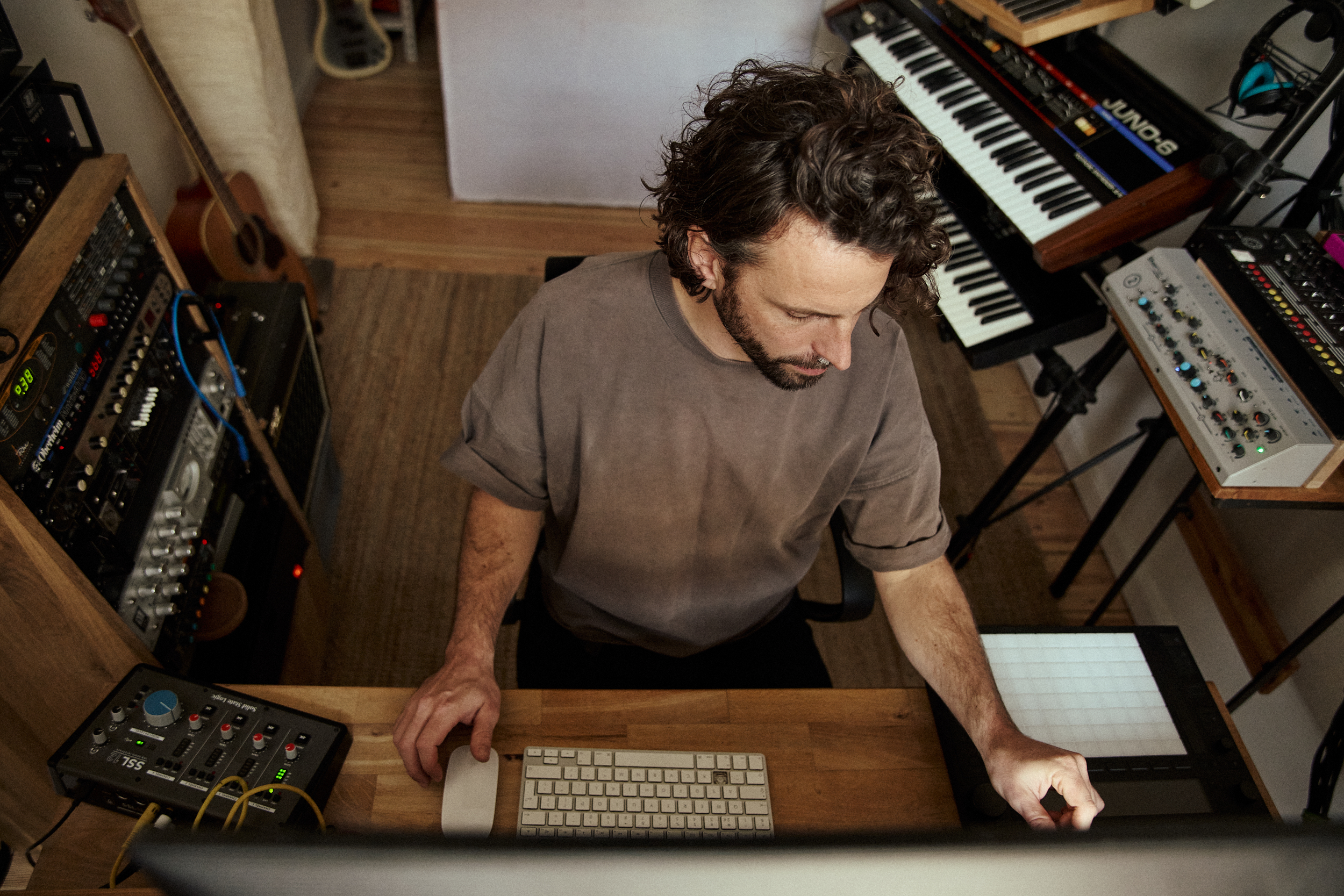
I strongly believe in being hands-on. Playing things in rather than programming everything with a mouse helps a lot. If you’re actually playing, drumming on pads, using the Ableton Push, or a MIDI keyboard, then you really have your own timing. You’re playing chords in a certain way. Every person has a different tendency to look for certain harmonies.
So get your hands on a keyboard. Get your hands on some pads. Turn the screen off sometimes. Maybe also send your sound through some analog or outboard gear. Then suddenly you’re like, “Oh wow, okay, this is different. This is me.” But you have to put yourself in a position where you can discover that. That’s hard if you’re clicking a mouse, and easier if you close your eyes and you’re drumming, or on a keyboard, or actually turning knobs.
How has working alone been for you so far? Does it differ much from collaborating?
I’ve worked on quite a lot of solo projects over the years. I’ve released under my own name and under a bunch of different monikers. But it’s generally easier to overcome certain hurdles and struggles when you’re with two people.
You might get stuck when you’re working by yourself. You might spend five hours working on one sound and still not be satisfied with it. I think we’ve all been there, and it’s frustrating. Then you listen back two days later and think, “Oh, this sucks. What was I doing?” I remember that one of us – Robin or me – would go for a coffee and come back and simply say, “I’m not sure about that hi-hat’. Turn it off.” And that saved you from that diversion.
How might you overcome those creative blocks when working alone?
If you’re working alone, you have to develop systems and habits to deal with those moments when you get stuck. For me, the processes around my work are almost as important as the technical side. I go running, take cold showers, go for walks, or spend time in the sauna.
I usually work for about one and a half to two hours, which I think is roughly the limit for deep concentration. Then I step away from the studio and do something that refreshes me physically before coming back.
When you’re stuck, it’s important to go against the instinct to push through and instead leave it for a while. Returning later, after being in a different environment, often makes the solution much clearer.
It took me about 15 years to develop that habit – to accept that it’s okay to be stuck, okay to be frustrated, and okay to step away.
Were there any milestones that made you realise Artefakt was turning into something more serious professionally?
The strange thing about Artefakt is that it started as more of a passion project. We released two tracks on a Field Records compilation and hadn’t really planned on touring.
But those tracks were picked up quite well, and one of our first bookings ended up being at Space Ibiza for one of Richie Hawtin’s ENTER. parties, which was surprising because we hadn’t even released an EP yet.
After our first EP on Delsin, things started to move quite organically. Looking back 12 or 15 years later, not every release received the same attention. There are periods of interest, and others where you have to push a bit more.
In the beginning, though, it happened very unexpectedly. Suddenly we realised we actually needed to build a 90-minute live set. That was when we started taking it more seriously – focusing on Artefakt full-time, spending several days a week in the studio and playing shows every weekend.
A lot of it also comes down to timing. Every period has its own sound or stylistic direction, so sometimes you simply have to be lucky and release the right music at the right moment.
Are you exclusively releasing on Delsin? Tell us about that relationship.
As I mentioned, we first did a few tracks on VA compilations with Field Records. They worked together closely with Delsin. Then Delsin asked us to do an EP.
It has been such a nice and professional relationship – mutually beneficial, I hope – and we really built up a personal connection with the label. It has kind of become a home base.
There has also been an album and a mini-album on Semantica Records, and in 2019 we started a label called De Stijl, which has since become an important platform for the project.
Undertow
Let’s dig into your track now. What was the overall premise behind “Undertow”? What were you aiming to express here?
It came about quite organically. I was in Greece, on an island called Agistri, and I had a relatively quiet week there with my field recorder. I started recording things I found on hikes – branches, twigs, natural objects, things like that.
There was a tree that was slightly split, and if you hit it in slightly different locations, it created a really nice resonance.
Then in the evening, back at the hotel, I started messing around with the sounds and trying to bring some movement into the shorter loops I had created during the day.
The initial idea was to create the track as much as possible from those recordings.
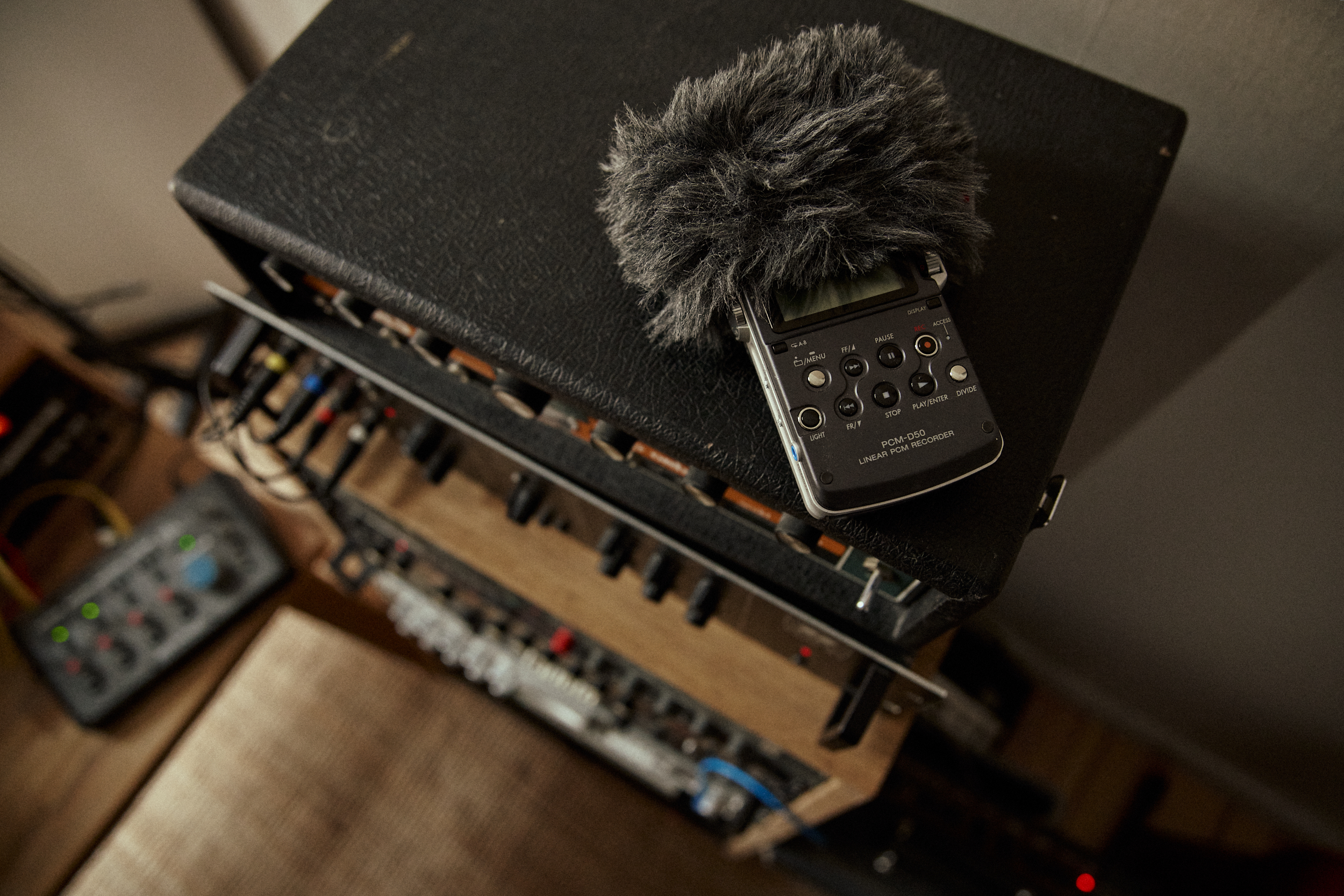
You’ve used those recordings to build the shifting percussion section of the track. There's clearly a lot happening on a subtle level here. Can you walk us through?
Yeah, there are quite a few tracks in this section. One of them is called Lead Percussion because it acts as the main element that evolves throughout the track.
It’s based on a very short loop of three hits. Each hit is processed in a similar way, but with small differences, and they enter at different points. That interaction between the layers creates the sense of movement.
Can you tell us about the effect chains you’ve applied to this section?
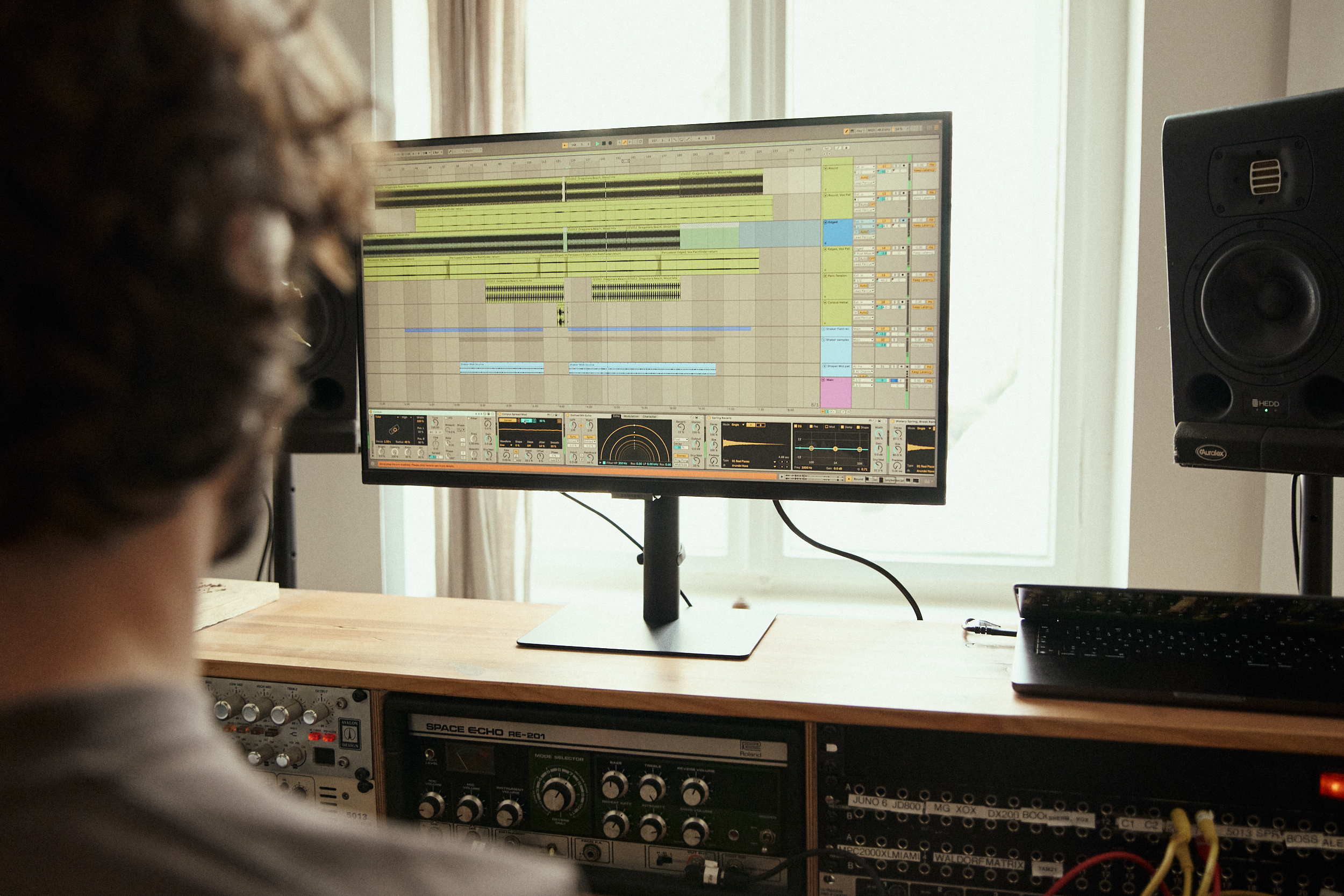
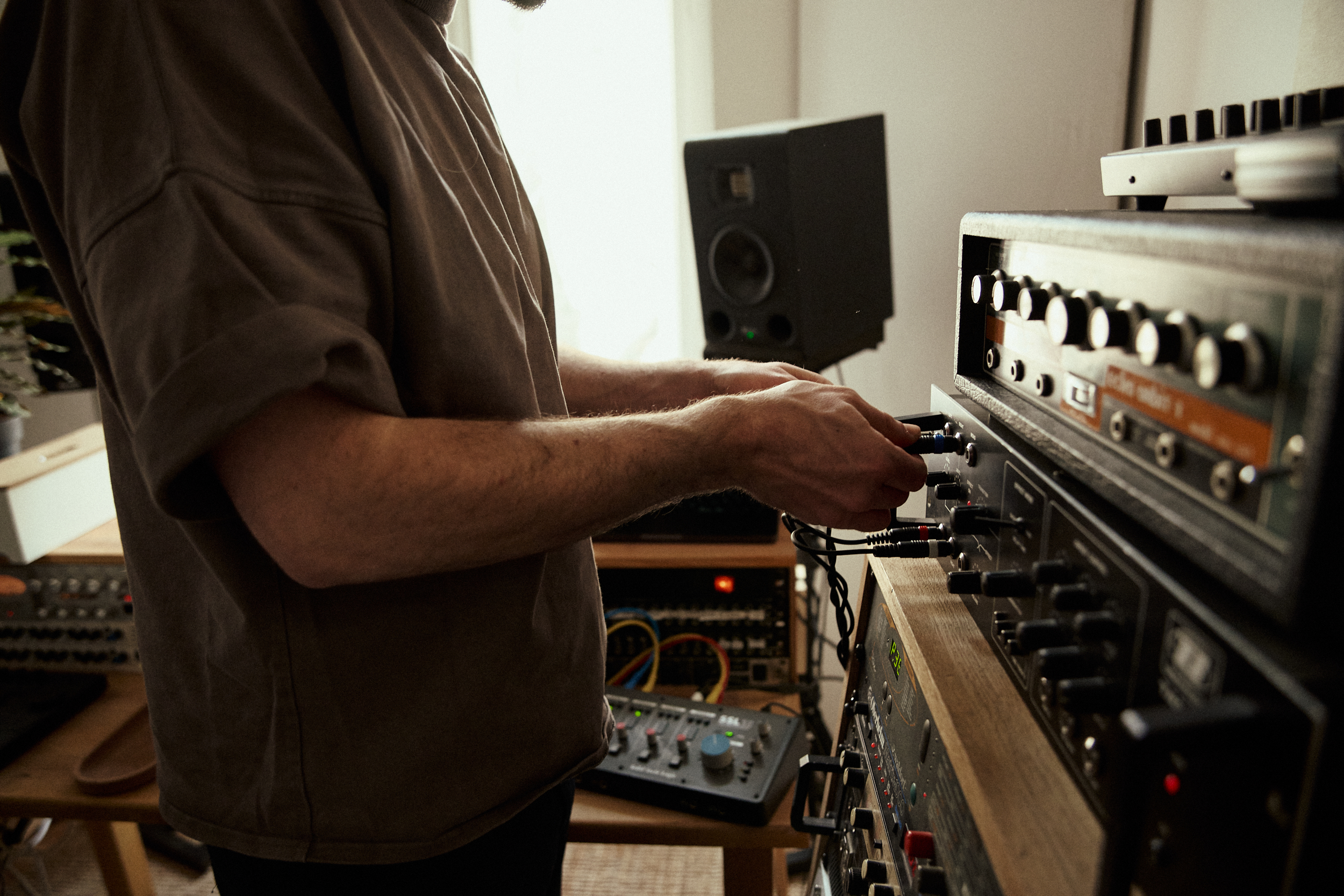
My approach to effect chains is largely based on the physical patch bay I have in the studio. For many channels that are printed as audio, the signal leaves Ableton Live through the interface and goes into the patch bay.
From there, I can route it to different pieces of hardware. For example, I might send it to a Roland Space Echo, then into an Avalon 737 tube EQ, and from there into a spring reverb.
That same logic also shapes how I build effect chains inside Live. The order I use in the physical chain tends to translate into the way I structure effects in the box.
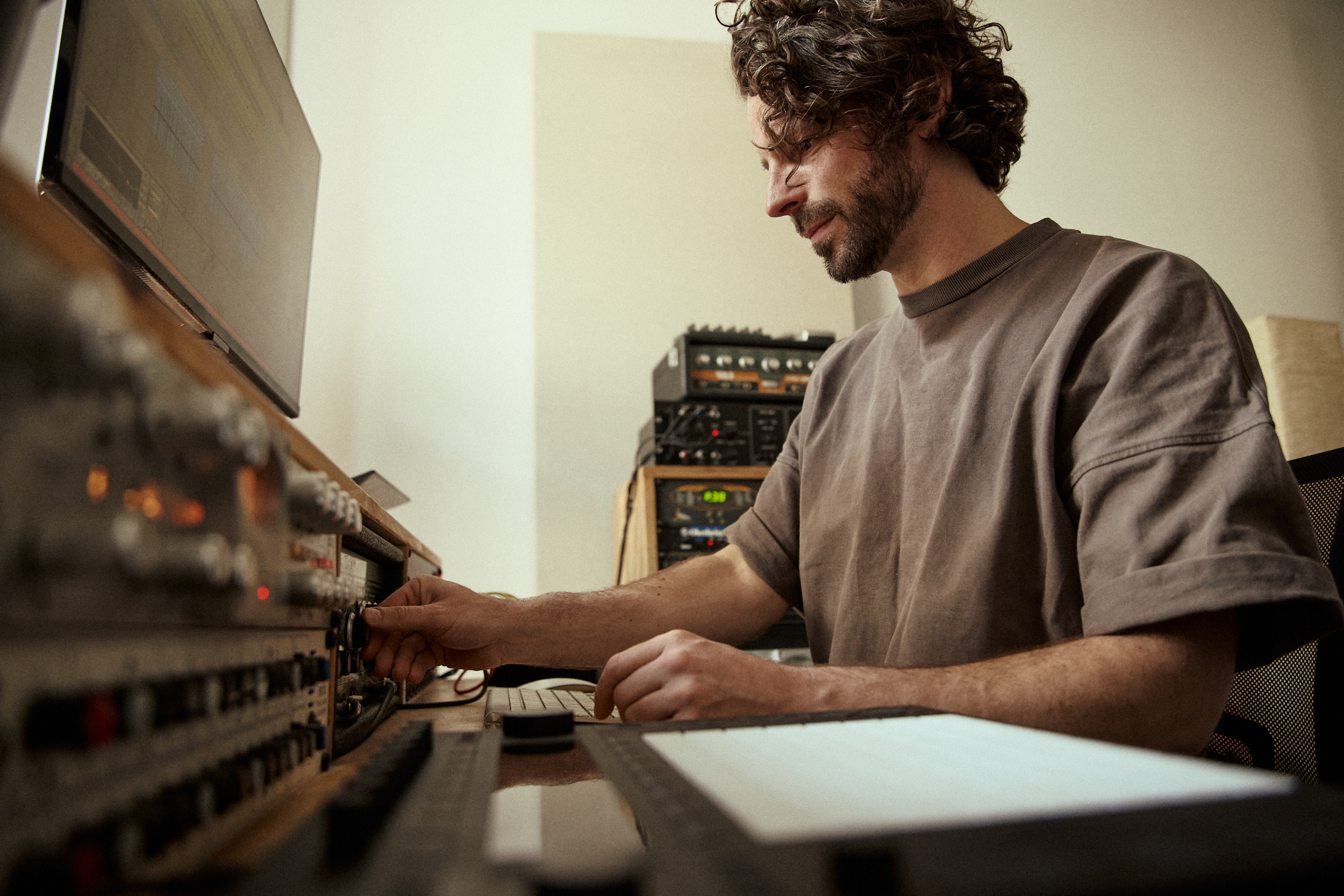
You've used Ableton Live’s Corpus device several times across the group – what is it about that plugin that keeps drawing you back?
Corpus is really a sound shaper – it gives the signal a different tonality. You could compare it to the Vox amplifier I mentioned earlier. The Tube algorithm in Corpus adds a woody quality to the source sound, which was something I wanted to capture in this track.
There are also two additional channels using Corpus with the Pipe algorithm, which is more metallic. Those come in later in the track to add tension and a sharper edge.
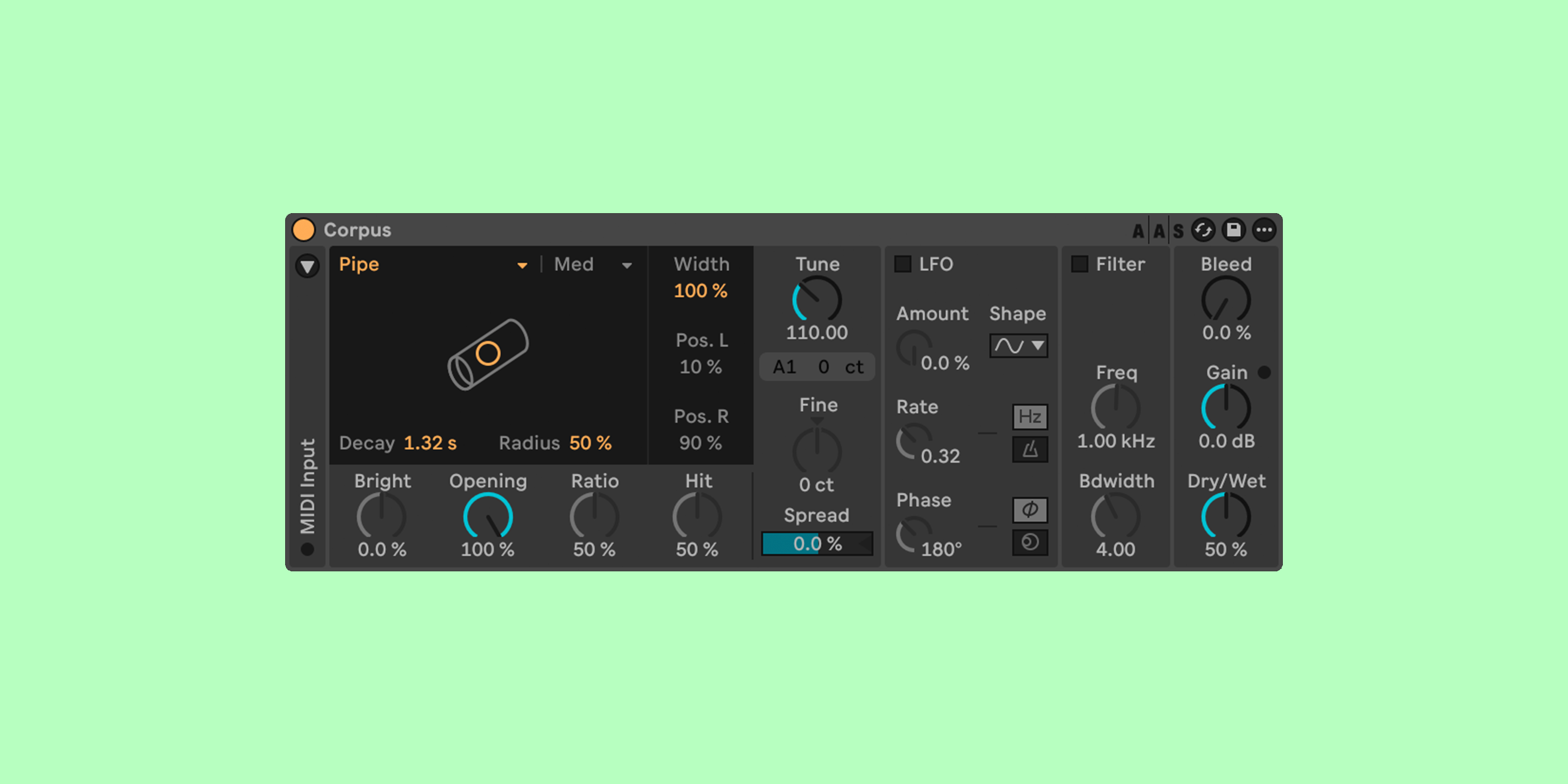
There’s also a very slight modulation on the Spread parameter, which creates a bit of detuning over time. That adds some tension against the pads. I also almost always use Live’s LFO device, because it offers more flexibility than many internal modulations. For example, in Auto Filter, the rate only goes so low, while the LFO device can go even slower.
In a physical chain, this kind of shaping would usually happen at the start. That could be something like a Roland Space Echo, which has a great preamp. Preamps add texture and character to the sound before any other effects are applied.
Your effect chains seem to follow a very deliberate order. How do you think about signal flow when applying effects?
In the physical chain, I usually start with a delay – in this case, the Space Echo. In the box, I often use Ableton’s Echo plugin, followed by a spring reverb. I built the chain this way to roughly mirror that structure.
Modulation tends to come later. First I shape the sound, then add delay and reverb, and only at the end introduce movement, once I’m happy with the tone and character.
So the effect chains are designed to reflect how I would normally work with hardware: shaping, delay, reverb, and modulation. Later – usually in a separate project – I do more precise EQ work to remove resonances once the audio has been rendered and the mix process begins.
“Sometimes you wonder whether it’s worth routing something and doing all that work when the changes are small individually, but when you add them up, they contribute a lot to the richness and texture of the track.”
There appear to be duplicates of your percussion tracks routed through the Vox Pathfinder amplifier.
Exactly. Those channels went through the Vox Pathfinder, which is quite thin but has a really nice EQ and adds a lot of character to the source sound.
I usually use it as a top layer. I like to blend that amplifier character on top of the original signal so I can control how much of it I add. Sometimes it’s nice to run the whole groove through it, but in this case, I just wanted a subtle layer of that thinner, grittier, slightly saturated sound.
Do you normally mix the signals you process with hardware back with the originals?
Often, yes. Here I routed the track through the Vox amp, recorded it back in, and used it as an additional layer.
That’s actually a central method in Artefakt’s production process. Instead of running many machines through a mixer, you can also work track by track with external effects. That allows you to build a high-end chain more affordably, processing only one channel at a time.
In my case it’s often the Space Echo followed by the Avalon 737. The Avalon’s EQ lets you shape the sound in a very tactile way – you can push it quite far without it sounding harsh.
Another option is to mic the speaker. You send the signal into the amp, place a microphone in front of it, and capture not only the pre-amp but also the sound of the speaker and the room. That kind of reamping can be really interesting.
It’s definitely more labor-intensive than using a plugin, but it’s also a lot of fun. Moving the microphone around gives you very different results. Even a hallway in your house can become a kind of reverb chamber – and that’s one way of developing a sound that’s uniquely your own.
The kick in this track is doing so much of the low-end rhythmic work. You don’t really have a separate bassline.
Exactly. It really depends on the quality of the kick. The pattern is quite busy here, and there’s that punchy, slightly distorted top layer in the first kick, followed by a sub kick that kind of has a tone in it.
This created such a nice driving low end that there was no need to add a separate bass and maybe undermine the groove. It happened quite organically.
Of course, if you’re working with a thinner kick, then it’s nice to have a relationship between kick and bass. But here, everything the track needed was already in those layers. There’s also a bit of a bass function in the lead percussion. It’s not a deep bass, but it lives in the mid-range.
In the mixing process, you’re also always looking at where the focus of each layer sits and trying to make them interact without interfering too much. It could have been a choice to have the lead percussion lower, but I think the way it is now gives a nice spread across the frequency range.
You’ve added an “Air Pump” sound within your kick section. Could you explain how you created that and why?
I added that later, once I understood the feeling of the track. Because of the long kick decays and how the elements interact, there’s this pushing and pulling motion – which is also why the track is called “Undertow.”
I wanted to amplify that movement. Breathing has that same in-and-out flow, but I didn’t want to use an actual breath sound, so I sourced a sound by Maslovy Tygr (CC BY 4.0), from freesound.org.
The sound had the right sense of tension and movement. After that, it was mostly about timing, placing it so it pulls into the kick – plus a bit of EQ, delay, and very subtle sidechain compression.
It ended up becoming one of the central layers, which is why I placed it in the kick group.
There’s a top, mid-layer, in your kicks group. Was this created with external hardware processing again?
Yeah. At some point, you get to know the qualities of different machines or plugins and where they excel. The Avalon 737 is very clean and really nice for adding a little more shape and punch to your kick and doing some EQ. Then I also use a TL Audio tube equalizer, which can get really dirty. That works nicely for that 80 to 200Hz area – a kind of top layer to the kick that you don’t necessarily hear super distinctly, but if you turn it off, you miss something.
I think it’s all about those little subtle additions and edits that add to the overall sound quality. Sometimes you wonder whether it’s worth routing something and doing all that work when the changes are small individually, but when you add them up, they contribute a lot to the richness and texture of the track.
Let’s jump to the pad section. They have a 90s jungle vibe, with what sounds like bird song and other textures embedded into them. Tell us about this part.
It’s very layered, again. The bird-like sounds are actually part of one of the pad patches.
It’s really three or four different patches from different synths, which are then processed through some outboard gear and recorded as a stereo audio channel.
One of the patches is a combination of a field recording and some synthesis. That’s something I really like to do to create texture.
Some synths and plugins already have a database of field recordings you can combine with pad sounds.
The hats and shakers have a lot of subtle variation. How did you approach that?
It starts with the MIDI pattern. The loop isn’t very long, but it’s also not just a single bar, so there are already small variations built into it. I also use functions in Ableton Live like Note Chance, Velocity Chance and Randomize, as well Recombine, Shuffle and Mirror to generate variations.
I added small flams, notes that land just before the main hits, and subtle differences in the shaker pattern. Combined with the Chance settings, the groove never repeats exactly the same way.
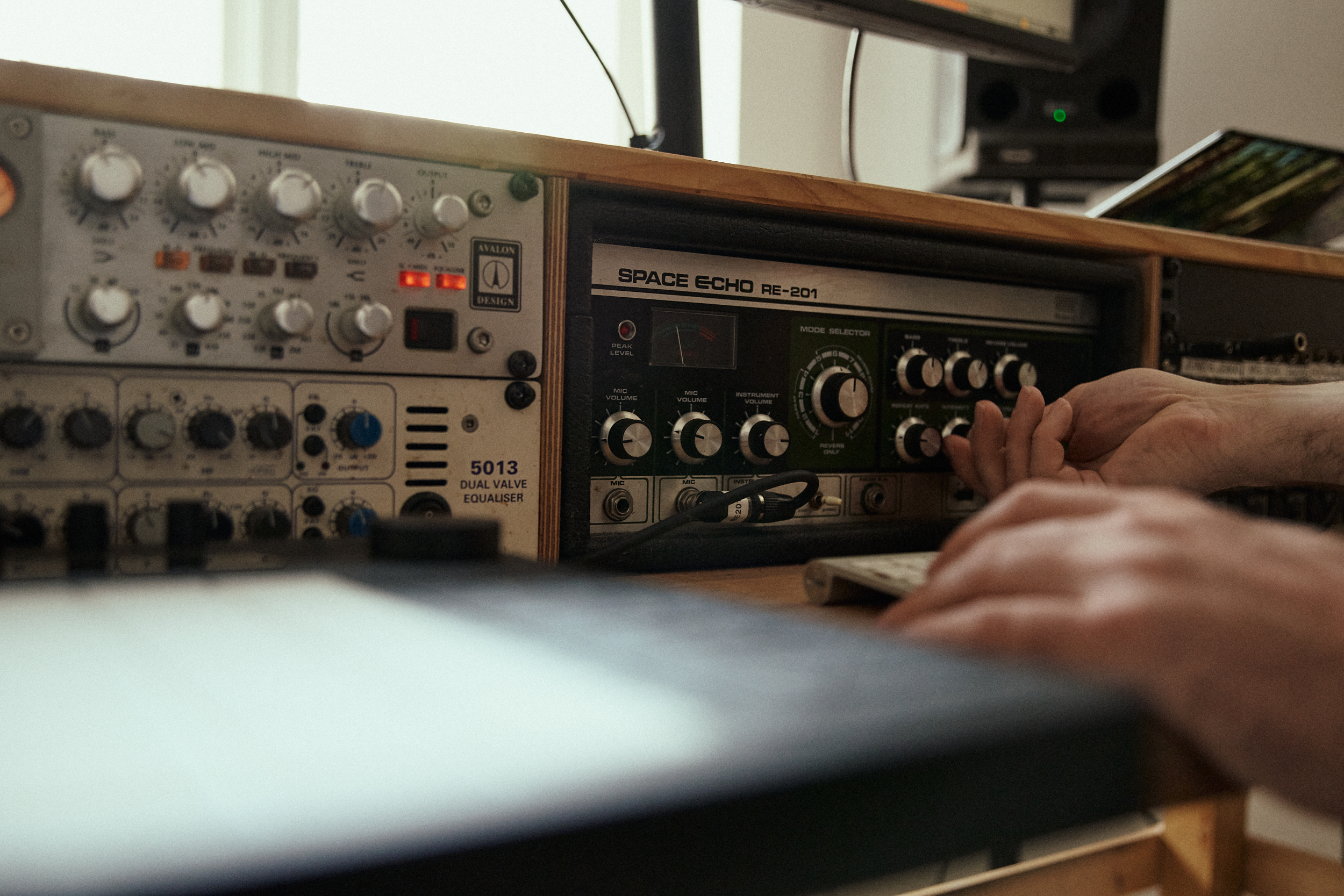
After that, the sound goes through an external chain – mainly the Space Echo RE-201 and the Avalon. The Space Echo adds a slightly imperfect delay. Because there’s no sync, you just dial it in roughly by ear, so it’s never perfectly locked to the tempo.
Together with the motor instability and the aging tape loop, this creates little fluctuations and imperfections. I’ll often record a few minutes of that and then listen back, marking the best sections and cutting them into a longer loop.
So there are several stages of variation: the MIDI pattern, the Chance settings, and finally the instability of the hardware. From those recordings, I select the most interesting moments and build the final groove.
There’s also an 808 hat, which sounds rhythmically quite natural.
Yes, that comes from combining Live’s randomization features with some manual adjustments. The process is always similar: generate material, then decide what you like. You allow some randomness and then select the best parts.
I even do that with kicks. Instead of processing a sound once and leaving it there, I might record a few minutes while changing EQ or compression settings, then listen back and choose the best moments. Sometimes I also use manual modulation I performed during the recording, or pick slightly different variations for different sections of the track.
What makes this approach fun is that you can step away from the screen. You turn some knobs, record the results, and later listen back and mark what works. Tools like Push help with that as well — you can play or tap rhythms, quantize them loosely, and keep some human timing that you might not program manually.
How does Push 3 show up in your workflow?
It’s relatively recent for me. This track was made before I started using it. But I’m really appreciating the hands-on aspect. You can tap, step-sequence, and I also really like the MPE functionality, where you can do glides and expressively control acid patches or even cello patches with vibrato.
I’m looking to integrate it more into the production process. I think, in combination with outboard gear, it will add a new layer of intuitive working. It also lets you work in places where you normally wouldn’t make music. For example, here there’s a very nice roof – I could sit there with the battery and headphones, and maybe I’d have a different kind of inspiration than in the studio. Then later, I can bring that material back into the studio, which can be super interesting.
I think that’s definitely something Push 3 is designed to facilitate.
Thanks for revealing so much about your creative process, Nick. Looking forward, what can we expect from Artefakt in the coming year?
Collaborations III with KMRU is coming in June this year, followed by the EP on Delsin Records featuring Undertow.
I’m planning several residencies in the spring and summer to work on a new album, so it’s shaping up to be an exciting year.