Artists
Downloads
May 07, 2026
clipping.: Push Into The Red

Since 2013’s midcity, Los Angeles rap group clipping. has been pushing their sounds firmly into the red. The trio of producers William Hutson and Jonathan Snipes and rapper Daveed Diggs (whom you may know from his Tony-winning portrayal of both Marquis de Lafayette and Thomas Jefferson in the musical Hamilton, his recurring role on the sitcom Black-ish, or appearances in films like Velvet Buzzsaw or Nickel Boys) forge connections between seemingly disparate genres like musique concrète, harsh noise, and hip-hop. Bolstered by explosive audio experimentation and virtuosic rapping, clipping.’s records tackle concepts like the survivors of a slave revolt hurtling through the cosmos (Splendor & Misery), the bloody carnage of a slasher movie serial killer (There Existed an Addiction to Blood and Visions of Bodies Being Burned), and the not-too-distant cyberpunk dystopia that awaits us all (Dead Channel Sky). The trio is as skilled as they are ambitious, and we talked to them about their searing sonic manipulations and immersive lyrical imagery.

“Run It” from clipping.’s Dead Channel Sky album
Dead Channel Sky is your “cyberpunk” album. How did you land on a theme for a record, and what kind of research do you do in order to fully embody those themes?
Daveed Diggs
Cyberpunk came about because we were asked to do a song, “Run It,” for a cyberpunk-themed video game that they never used.
Jonathan Snipes
It could have been any video game. [everyone laughs]
Daveed Diggs
They ended up using a Run the Jewels song – whatever, I'm not jealous. [Laughs] We wrote that song, we're like, "Why haven't we done this yet? This is definitely a whole album."
Jonathan Snipes
That's usually what happens. We accidentally make one thing when we're in the middle of a project that doesn't quite fit, and we save it. We made "Club Down," for instance, during the sessions of what became Wriggle. It didn't feel like the other stuff we're making, but it did feel like a horrorcore track, so it sat for many years. Eventually, we thought we should make a whole horror project.
William Hutson
Sometimes it's not that it doesn't fit the current project, but that it opens a ton of avenues. This one worked, so we figured if this is where we were going, we could do 20 more. It lays out the path. "Run It" has this Big Beat, '90s radio electronica vibe that led to a drum-and-bass track or an acid track. Then we came up with a plan for what the record would be based on what it revealed to us.
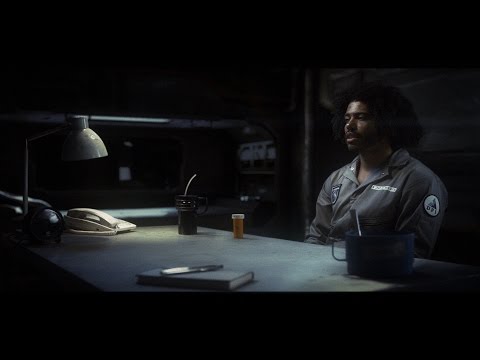
clipping. – “Air ‘Em Out” from Splendor and Misery
Jonathan Snipes
When we were making Splendor and Misery, the three of us had very different ideas about what the actual story was, so we said, "Let's decide that all of those things could be true based on the evidence that we have to reconstruct the story. The album is all “primary sources” of documentation, and the audience should never feel like they're listening to a thing happen in real time, but should feel that they're actually going through an archive. The truth of this incident is forever lost. We don't know what that is, and it doesn't matter, because a bunch of different things could be true based on the evidence that we have in front of us." I like that way of thinking about making art. It's not our job to write the story; it's the audience's job to piece it together from the evidence.
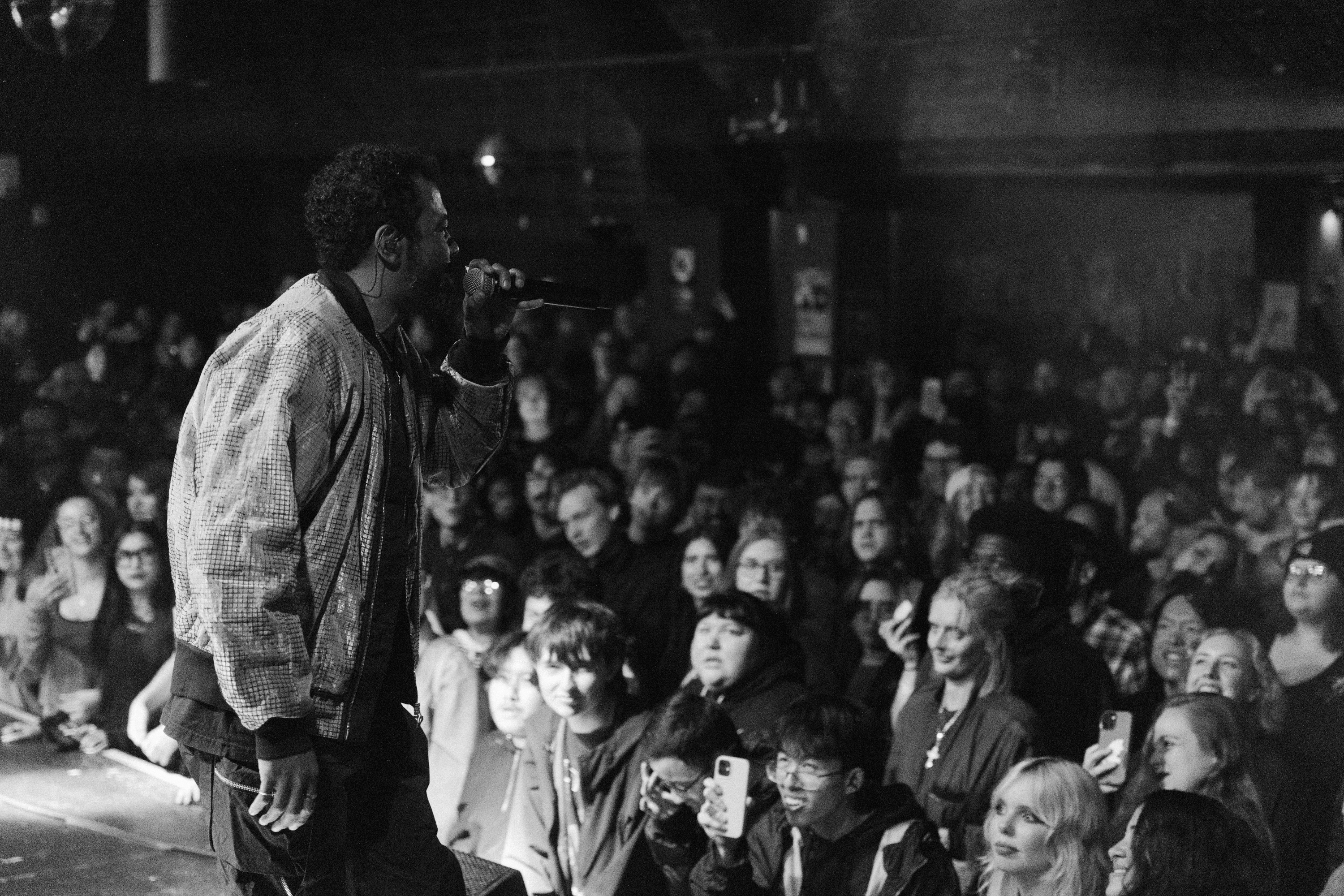
How does prep for a clipping. live performance work?
Jonathan Snipes
There's not nearly as much of it as any of us would like. Every time we're on tour, we talk about how it'd be so great if we had just a couple of weeks to sequester ourselves and really build the show we want. And that never happens. [Laughs]
I used to do this band called Captain Ahab, which was basically just a dancer and me, and I was a Max/MSP programmer. I wanted my own system in Max, so I programmed this incredibly buggy, overcomplicated, massive Max patch that let me sequence audio files and sort of DJ them fluidly, jumping between parts of songs. I built all the effects by hand, the stutters, distortions, reverbs, and the like. When we started clipping., I was still doing Captain Ahab, and I just made a different file with the clipping. loops in it and loaded it into that same system.
We used that system until 2016 or ‘17, when some combination of Max/MSP updates and Mac OS updates meant that my timing wasn't working anymore—it wouldn't really crash, but it would just stop playback in the middle of the set. A lot. Like, once a show. I started rebuilding it from scratch, and I thought to myself, "There is a piece of software already that I can use Max inside of if I really want to!" So we transitioned to Ableton for our 2020 tour. I built the whole thing, tested it, and it worked. Then Covid happened, and everything got shut down. I feel like the first shows we did in that Ableton setup were the from-home, pandemic-era stuff. And now, that's what we use. There's still a ton of Max for Live in it.

clipping.’s Tiny Desk Concert
Are you playing straight versions of the songs that you've written? Is there an element of improv at all?
Jonathan Snipes
The place where there's the most play is the transitions, but we keep the spine of the songs pretty similar. Even if we're fucking them up enough that they become less recognizable, Daveed has to know where we are; he has to know what the song is. Now that he's on in-ear monitors, we can actually do a lot more of that because we can send Daveed a completely different mix from what the crowd hears. He can hear the song and a click, and I can do whatever.
William Hutson
We can ruin it completely, and he'll stay on beat. [Laughs] Jonathan's stuff is basically an incredibly full-featured, stemmed-out mixing DJ setup. He's got full control over all of that, but it all stems from our studio tracks. And we have a pianist now!
Jonathan Snipes
[Laughs] We do have a pianist now. I have a couple of MIDI-controlled synths that will play parts of the song I've removed from the stems and things, so I have control over the synth parameters. There are a few banks of sounds I can trigger, but it's mostly like DJing with effects. A lot of which are stutters, remixers, and things. My Max programming style, like, the big Max patch that I use for my solo performances, there's not a lot of DSP in it. It's mostly clever ways to reorganize audio files on the fly or to treat Max as a really smart tape machine.
Download a collection of sounds from clipping.’s Jonathan Snipes
"This is a collection of field recordings, some from clipping. tracks, some not, but all clipping. adjacent. Made on clipping. tours, photo shoots, etc.”
You're six full-lengths deep at this point, so I'm sure that the process of how you shape songs together has changed a great deal over time. Are you in the studio at the same time?
Daveed Diggs
It's gotten mostly strained by distance and time. Oftentimes, we're talking about or sketching things separately, but at some point, we're all gonna have to be together in order for anything to actually happen. Bill and Jonathan often make music without me and then send me beats. Eventually, I'll come over and be able to focus enough to add words to something. Once there's a skeleton, a lot of editing happens. And that can happen either all at once or in pieces, but it always seems to me that the bulk of the work on any given track or album happens with us all together.
William Hutson
Jonathan and I will sometimes bring separate ideas and then put them together. We try to be about 10 feet apart while we're making two things at once. We'll make some things, and after we've amassed a few, Daveed will come over, take one of them into the other room, and start writing to it on headphones while we make something new. He'll come in, and we'll switch back to that thing. He'll lay down a verse and go back into the other room to write, and we'll switch back to the new shit we're making. That's the most productive, comfortable, and logical workflow we try to adopt.
Jonathan Snipes
Sometimes, Daveed will write something sort of free or to a click, record it to a click, and then Bill and I will build a beat around it. I feel like we make more outlandish choices when we already know that the rapping can hold the track together.
That was something I wanted to touch on because there are some songs, like "Club Down" or "He Dead," that have fainter, less-defined pulses, which are a bit more droney. Daveed, how do you find pockets on tracks like those? How do you navigate more nebulous beats?
Daveed Diggs
I'll often ask for a click on those, but usually, the choice there is that my voice will be the metronome. The assignment is to write in a really specific, repeatable cadence that lets us know where we are at all times. That is the spine of it, which will then allow for the rest of the sounds. I almost always try to generate the idea without a click, because I want to know it has to be based on the feel without it. And then once I know what I'm trying to do, I'll ask for the click so that I can make sure I know where I am in the song. A technique I use a lot is to repeat phrases, with a word or two changing in the same spot in each verse, so I'll need to be able to count bars to know where I am. [Laughs]
William Hutson
Is Daveed's voice, the drums, the click, the thing that tells you where you are rhythmically and holds the song together, leaving us to be really free? Or is Daveed's voice going to jump all around, and are we going to make something that loops or repeats in a way that you feel that pulse? I actually think "Club Down" is an interesting one, because that one has a bunch of really different cadences throughout that seem interestingly unmotivated by the forward progression of that building drone. Daveed's voice decides what part is what, and the thing itself just goes, "Clonk. Clonk. Clonk."

Jonathan Snipes
We're just defining the downbeat.
Daveed Diggs
It's really story-guided. But that was one of those ones—and this happens all the time—where they send me a beat with no particular structure, like, "Here are a bunch of ideas that could happen in this song." And I'll just write to exactly what's there. [Laughs]
Jonathan Snipes
I especially love it when we send Daveed something with a very clear verse-chorus structure, and he just ignores it and smashes right over it. [Laughs] If you listen to the beat, there are actually very clear, repeating A and B sections, and the rapping just doesn't do that at all. "Story" is certainly a good example.
“The original concept of this band, early on, was that these are short stories or novels. As a result, there is a lot of work that goes into coming up with these weird miniature fictions.”
William Hutson
Yeah, we'd be like, "Here's eight bars of this sound. Maybe it changes, depending on what happens. Here's eight bars of another sound." And he would just write as if that were the finished song.
Daveed Diggs
That's the assignment! [Laughs]
Jonathan Snipes
I'm trying to think of all the ones that we have written that way, with words first, beat second. "Inside Out" is one.
William Hutson
The most recent one was "Go," because we just gave him a click in five-four time, and we were like, "We'll figure it out!"
Jonathan Snipes
"Story 2" worked that way, too. We knew how we wanted the song to work, but we also knew that if we made a beat that did all that, it would be so confusing. For the first version of "Story 2," I took 808 sounds and delineated the rules about structure, like, "Hi-hat is the metronome, crash symbol is time signature changes, and the tom sound is on every bar." The kick and snare are the feeling of that time signature. The first version was just 808 sounds with nothing extra so we wouldn’t get confused. I think what we learned is that we actually did need those placeholders. We replaced all the sounds in the final version, but the same sound happens on every time signature change.
What other rhythmic challenges have you given yourselves, either that you think you've pulled off or you want to try again?
Jonathan Snipes
I really love different ways of organizing 12/8, which I've learned from Philip Glass and Steve Reich. You can count 12/8 either as three groups of four or four groups of three. It's the same length of time, just subdivided in cool ways. For "Story 7," I was like, "You could do that with 15, right? You could do three groups of five and five groups of three."
William Hutson
It's 15 and 21, right? It turns into 21—it's like sevens and threes in the second half.
Jonathan Snipes
I think so. It's like three groups of seven. And then it's a metric modulation of four. We just brute force four-four over the top.
Daveed Diggs
That part goes super hard!
Jonathan Snipes
We should add it to the show someday. I feel like we've only barely scratched the surface of metric modulations.
William Hutson
We're also the only rap group that's ever done it.

“Mirrorshades Pt. 1” from clipping’s Dead Channel Sky album
What kind of notes do you give each other? How do you delineate roles when you are figuring out what a song needs to be?
Jonathan Snipes
There are certainly many conversations between Daveed and Bill about the lyrical content and the overall dramaturgy. By the time that we're all together, there's been some decision about the trajectory of a song that I didn't know about.
Daveed Diggs
If Jonathan and I are left to our own devices, some real silly shit goes down. Bill is definitely an arbiter of taste in this band that is probably appreciated more by the audience than by us.
“One thing we don't do, which I think people probably assume we do, is mangle sources. If we record a sound, we want you to hear that sound.”
William Hutson
We definitely try to do everything together, though. Obviously, it's Daveed's voice and his lyrics, and we make the beats, but we're sort of fluid. I think this might not be true of other producer-rapper relationships, but we're allowed to suggest what a song could be about. The three of us have conversations about what an album is. There's a lot of conceptual framework and big-picture stuff we have to figure out to determine why any two songs end up on the same project. We're not very good at the thing of "These are just the songs we made this year, so that's what the album is."
Jonathan Snipes
That's kind of what the albums midcity and CLPPNG were.
William Hutson
That's exactly what they were, but we've had a harder time with that later. We have a rule that these songs are not first-person narratives about the rapper's own life. For most rappers, the premise, whether it's true or not, is that they're just telling you about their life, right? They use the word I. The original concept of this band, early on, was that these are short stories or novels. As a result, there is a lot of work that goes into coming up with these weird miniature fictions.

clipping. live on The Best Show
Do you consider yourselves a part of any specific, maybe West Coast, rap tradition? Or is there an era that you admire the most?
Daveed Diggs
That's probably a lot about how I rap, honestly, given it’s where we are and where we are from. Growing up, Freestyle Fellowship was way more important to me than A Tribe Called Quest. My formative practice isn't very beholden to East Coast rap music, so maybe that's just the thing I can't turn off. But certainly, there are many other influences there. Aesop Rock is on Dead Channel Sky and is clearly an incredibly formative rapper for this group. But I’d say we’re in a tradition of stuff like Freestyle Fellowship and Antipop Consortium.
William Hutson
The short list of people we feel we've grown out of is sort of piecemeal. It's not like we grew out of a scene, you know? Freestyle Fellowship and Project Blowed have that spirit of "Never rest on your laurels. Everything has to be different and new." It's very inspiring and definitely part of what we do. But sonically, I feel like we come out of Public Enemy more than anything, and weird old shit like 4 Hero remixing Scarface, or that Nine Inch Nails remix of Biggie. But also, Dälek, Anticon, and stuff like that. They’re all from different pockets of experimental rap, but what they all share is a clear love of rap. They weren't sitting outside of or criticizing rap. They were doing it out of a love for the genre, the form, and the practice.

clipping. - “Ask What Happened (live)”
I'm also curious about how sound itself influences the songwriting process, not overarching traditions to which clipping. belongs, but little sounds, like the layers of gunshots in "Shooter," or the chimes in "Ask What Happened." What kind of criteria does a sound need to meet in order for you to organize a song around it?
Jonathan Snipes
There certainly isn't one rule. Bill and I both have degrees in theater sound design, so we both know quite a bit about the physics of how sound actually works, which is very helpful in making the kind of music we make. But one thing we don't do, which I think people probably assume we do, is mangle sources. If we record a sound, we want you to hear that sound. We're not taking a recording of, say, rolling pencils across a desk and stacking 16 plugins on it to turn it into noise. Either we're making noise, or we're playing you a recording of pencils rolling across the desk. The chains of processing aren't very long, usually, and if they are, it's to coax something out of the original sound but still keep its character.
We do want people to hear the trouble we went through. Are we getting credit for this idea? We don't mean that in the sense of like, "Are people impressed by us?" It's more about you hearing the process. That comes from our admiration for musique concrète, which can be really satisfying because you can hear what the acousmatic sound was and what was done to it. I don't remember the French for it, but the really early Pierre Schaffer thing with the trains ["Etude aux chemins de fer"], is not so processed that you can't tell they're trains. We want you to hear what we did because that's what interests us when we listen to other people's music. That's not all, though; it's not purely a demonstration, as Alvin Lucier says in "I Am Sitting in a Room." It's not just a demonstration of a process; we want you to hear it.

clipping. – “Get Up”
William Hutson
Pieces like "I Am Sitting in a Room," or Steve Reich's "Phase" pieces, I mean, there's a handful of examples. I teach sound, and I love playing "I Am Sitting in a Room" for people, because I don't have to tell anybody anything about it. I love pieces that require no context. These are really specific process pieces, but the process is evident by listening to them. That's a real sweet spot that I feel like we've only hit maybe a couple of times. "Get Up," for sure, and "Run For Your Life," that song with La Chat, where the beats are coming from cars. I feel like people know exactly what we did in that. And those were incredibly hard to make. [everyone laughs]
You've stressed in previous interviews that one of the most important things is the “feel” of your sounds. How do you know when you've gotten that right?
William Hutson
It takes so long! It takes forgetting a song, then re-listening to it and thinking, "Oh, we did get that right." Once we make it, I'm always wondering, "Is this it?" That's just a process of making art and how your brain works. You're really excited when you're making it, you're like, "This is that shit!" The second you print the song and listen to it again, you're like, "Okay, maybe..." And then years later, you're like, "Oh, that was that shit."