Artists
Mar 10, 2026
Juana Aguirre & Cardinal Sur: Going Gridless

Argentine artist Juana Aguirre is carving a distinctive path in contemporary Latin American music, weaving a unique fusion of intimate and experimental folk with electronic textures. Known for her work as founder and vocalist of the folk rock band Churupaca, she later settled in Patagonia to begin her solo career. Isolated during the pandemic, armed only with a scarcity of gear and a computer, Aguirre reassessed her connection to Rio de la Plata folk music and released the acclaimed debut Claroscuro in 2021, followed last year by her sophomore album, anónimo.
Central to Aguirre’s live performances is her collaboration with musical director Cruz from Cardinal Sur. Together, the duo spent three years developing a performance setup built around real-time vocal processing and Ableton-driven sound design – turning Aguirre’s voice into a dynamic instrument capable of crafting textures, loops and rhythms onstage. This innovative partnership has elevated her live shows into immersive, evolving experiences, marking Aguirre as one of South America’s most forward-thinking artists.
We speak to the duo to discuss how Cruz and Aguirre collaborate in the studio and utilise Ableton as the brain behind their gridless approach to live performance.

Juana Aguirre - “la noche”
Juana, you started your career as part of the six-piece band Churupaca. How did that evolve into a solo career?
Juana Aguirre: It was a long time ago, but I lived in Bolivia before moving to Buenos Aires, started Churupaca and played with the band for about 10 years. It was like my school – I learned how to play instruments and we travelled a lot, but when the pandemic started we couldn't play live anymore so I began making my own music. I spent a year living in Bariloche in Southern Argentina with only a computer and a few tools working on my album Claroscuro, which was entirely created in Ableton Live.
Cruz: I'd been working on how to adapt digital music to the stage based on the idea of the computer as an instrument and had already known Juana’s partner for a long time. He suggested that we connect, which I felt could be interesting because we both came from a similar background. I too was involved in a project for around 10 years that finished during the pandemic, so we met at a crossroads – a moment for discovery and opening new doors.
“I used to think that using machines was going to be a really different approach to playing live, but they’re just different tools. We’re playing together and changing songs from night to night, so it all feels like we’re playing live.”
As a student of graphic design Juana, do you think that’s played a role in how you view Ableton as a music production tool?
Juana: Nobody ever asked me that question, but I totally feel that graphic design is similar to making music from the perspective of projecting ideas onto a graphical system and being able to focus on the small details. When I created Claroscuro, I was living far away from the city in the middle of the woods near a national park – there were lots of animals around and not many humans. It was spacious and I was away from the noise of the city, and I think that landscape really fed into the music.
Cruz, what can you tell us about the origins of your Cardinal Sur platform?
Cruz: I had a band in the 2010s called Pommez Internacional and like to think that we were breaking new ground in terms of how we produced and thought of ourselves as a live entity – at least here in Argentina. We’d go into the studio and try to break everything up in terms of playing certain instruments, and while it might be common now, it wasn’t very common back then to use a computer on stage.
I studied classical and contemporary music and had been playing instruments all my life, so I was always interested in the combination of these two things and gradually began working with artists to try to figure out ways in which their studio productions could be brought to the stage. I’ve been using Ableton Live since 2008 as a way to develop instrumental possibilities around it, but Cardinal Sur hadn’t turned into a company before I started working with Juana.
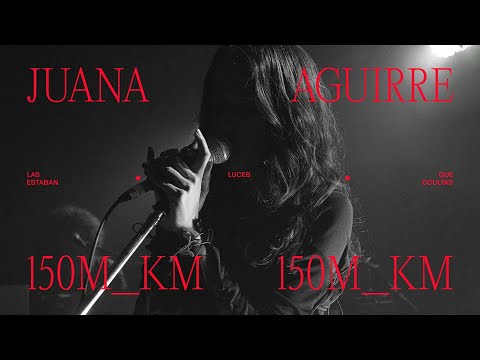
Juana Aguirre performing “150m_km” from her first album Claroscuro
Was Claroscuro the first album that you tried to adapt for live performance?
Cruz: Juana’s first album was an opportunity to experiment with music that was not meant for, or even thought about, as being something that could be played live. During the pandemic, we didn't know if we were ever going to play live again, but it also became the moment when I realised that my main interest was going to be in live music. I'm also a producer, but performing live has always been a challenge and that's the kind of world around which Cardinal Sur was built. We're interested in the intersection between artistic design, music production, performance and the technicalities behind taking a concept and bringing it to life on stage.
Juana, you released a second LP, anónimo, in July 2025. How do you feel it’s furthered your fascination for combining folk and electronic music?
Juana: When I started producing and recording I was nervous – imagining that someone who really understands production might think my process was wrong somehow. I’ve always tried to study music, and failed a lot of the time, but I eventually started to accept that my approach is more about not knowing and getting surprised by the things that I'm doing. Although I spent a lot of years creating anónimo, I finally feel good enough to accept that my process is more about letting go of those music-making rules. I work with very few tools and get very easily distracted, so when I acquire something new I really try to learn how to use it, which involves a lot of experimentation that’s not related to a previous idea.
What I like about using Live is that you can cut and paste time and put sounds somewhere else in a track. Working this way is a recurrent theme for me because I’m always finding spaces in the middle of songs where these beautiful little ‘errors’ can fit really well. I created these ‘collages’ on a lot of the songs and it feels like such a familiar part of using the software.

Juana Aguirre - “lo_divino”
Do you usually start with an acoustic instrument, a vocal or a beat?
Juana: It's always different. For example, there's a song on the album called Lo Divino that I recorded on my cell phone and exported to Live just to get a reference. Once I started editing, I found the song – so it’s a very intuitive process. My first album was quite focused on songwriting, but with anónimo I mostly started by playing guitar until I had some chords and then worked in the computer to create a musical world that could go with it. I don't have a lot of plug-ins, but I really love working with digital and like all the fades and cuts to be noticed in my music. When I get stuck, I bring other people in to get another perspective, whether that’s Cruz, who helped me to produce the song Las Espinas, Ezequiel Kronenberg on La Noche or Juan Stewart on Lo Divino.

A live performance of “volveiron”
How did you expand your collaboration to bring the album to life on the live stage?
Juana: When claroscuro came out we received a message from a producer in Slovenia who invited me to his festival and I told Cruz that we couldn't say no and had to make a band and go there. The process was a little bit rushed, but it was magical to think about how we could reproduce the music from studio to live. We decided to focus on trying to see how much we could expand the sound of my voice, because that’s my most intuitive instrument. We started by playing with different effects and eventually created a controller to process my voice and widen the palette. That gave us a lot of resources to work with because I could then use my vocal as a texture, sing lyrics and pitch them down or repeat them.
Cruz: For us, it wasn't going to be interesting to just put down some backing tracks and try to reproduce the sound of the album. In particular, I think that Juana wanted to explore some things on stage that she hadn't been able to with her first album, and that came from my suggestion to take the music off-grid, which is something I've been exploring for a long time. The combination of those two things generated the space we needed to create a show that was electronic, digital and processed, but with a lot of personality. It couldn’t be pre-programmed and had to feel alive, so we cancelled the idea of using backing tracks and didn’t even play with a click track.

Juana Aguirre’s performance set-up
How do you retain the music’s personality within such a digital environment?
Cruz: The idea was for the music to be alive and sound dynamic, which gave us the opportunity to build upon things that are not structurally percussive. That's why we decided to have Juana’s vocals become the main element of the show and develop some vocal processing instruments. Once we had those, we could start building everything around them. We also wanted to incorporate a drummer to expand the sonic dynamic of the show. I wasn’t going to play in the band at first, but Juana insisted.

Juana Aguirre’s stage station includes a four track cassette player and custom made vocal processing controller
What controller did you use for Juana’s vocal processing?
Cruz: It’s from a brand in Argentina called Yaeltex. They make very unique custom controllers for live performance. We got to a point where Juana knew what she wanted to do with her vocals, but her current controller didn’t allow her to fully express herself, so we went to Yaeltex with all of this information and their controller has really helped the show to grow a lot over the past year.
Was everything synced in Ableton?
Cruz: I did what I've always done, which is to build a live set comprising many instruments using Ableton as the brain – not to reproduce things that were already recorded, but as a core instrumental device. Certain things came out of necessity because the album has bass sounds so someone has to play bass and we decided that I should play keyboards too. Juana also felt that someone should play guitar – well, I play guitar, so I bought one for the show.
What's interesting is that we didn't know what to do for many of the songs, but we knew that we didn't want to try to emulate the original. If we started playing and it felt good, then great – we’d go that way. That approach has become a signature of the project, which is great for people coming to the shows because they’re going to be surprised by the versions they listen to.

Ignacio Cruz´ performance set-up
You also integrated a Push 2 into the set-up. Was that as a performance tool or some sort of secondary command centre?
Cruz: Both Juana and I have computers running Live. For Juana’s vocal processing setup we had these really old AKAI MPD 32s, which are like a controller version of the MPC, and they really came in handy because they have faders, buttons and pads. I brought a keyboard controller that I’ve had since I was 18, but I acquired a Push unit back in 2021 so I decided to use it as a control centre for changing presets, tempo, effects processing and playing sampled one shots. The Push has actually been very handy because it allows me to look at the screen and explore a lot of production elements while we’re rehearsing.
Are you able to influence each other's performances in real time or are the systems deliberately isolated from each other?
Juana: We try to keep it sounding really organic. Because the machines aren’t clocked, we have to look at each other, so we’re really playing. I used to think that using machines was going to be a really different approach to playing live, but they’re just different tools. We’re playing together and changing songs from night to night, so it all feels like we’re playing live.
Cruz: It’s just about having a different mindset. Whether you’re turning a knob, pushing a key or pressing a pedal, you develop your own technique. I'm obsessed with musicians from the ‘40s or ‘50s – the free jazz era when people would go on stage and didn’t know what they wanted to play but knew their environment and knew each other. They had a strong connection, which is something to aspire to whether or not you’re using some sort of electronic or digital energy.
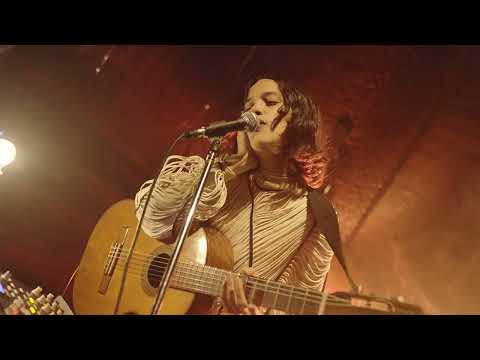
Juana Aguirre performing “Fuego” live
In the early days Juana, you were performing in a more traditional live band. Was it difficult for you to adapt to this gridless environment, with more reliance on electronic instruments than acoustic?
Juana: It was very difficult and I was really nervous and confused when we started playing the first few shows because I wasn't used to working with machines. It was great to have a sampler, take stems from my studio sessions and bring these essential elements into the performance, but I had to go through a very intense learning process in a short space of time. Each show was giving us back information and we’d change the set based on what we’d learned throughout the process, but now I can say that I love it and have been able to discover my own way of playing.
Has the reception you’ve received in Argentina been different from Europe?
Cruz: The crowds in Argentina are very diverse – especially Buenos Aires where we live. The music scene is huge and people are thirsty for new music that breaks barriers, but I think this project exists at a necessary time because there aren’t many people thinking about our approach to playing live. The album is called anónimo for a reason, and the music is well-received not because it’s electronic or folk music, but because people are really intrigued by how the sounds are made. They notice that we're doing a lot of stuff on stage and are kind of mesmerised by that, which is beautiful because it speaks a lot about the power of music in all of its forms.