Cody Dillon: Music creation and building trust with students
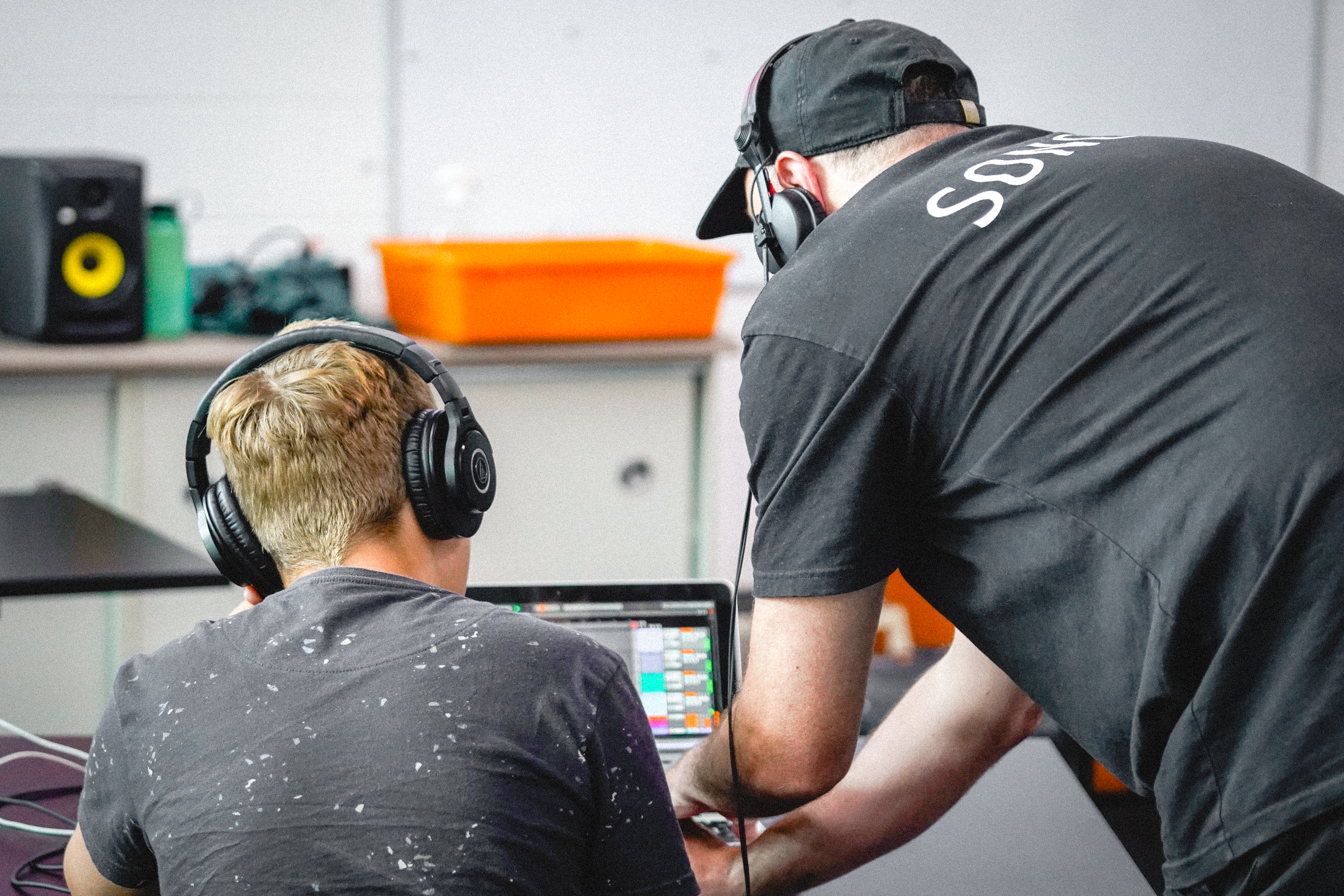
In a classroom, community space, or youth justice centre, headphones go on, and the room quiets down. A laptop opens, Live loads, and within minutes, a beat starts. In a room full of students who do not feel safe or confident in class, the way these first minutes are conducted impacts the entire session.
Cody Dillon spends much of his time running SongLab, a music-engagement organisation working within classrooms, community organisations, youth justice centres, and within the DigiVan - a mobile studio that he runs in partnership with The Skill Engineer, that traverses Sydney and the rural outback of New South Wales in Australia. He travels with laptops, Ableton Live, headphones, and a set of MIDI controllers and works to provide an engaging music experience for young people, regardless of background or life opportunities.
“The model of my business wasn't really meant to be disengaged, disenfranchised youth, but I'm very happy that's the way it's gone. So I'm generally working with a lot of First Nations youth, culturally diverse youth, and within juvenile justice.”
The pedagogical challenge
Engaging mixed ability groups
For Cody, the DAW isn’t only about teaching music. Many students arrive disengaged, anxious, or unsure how to participate, and he has spent years refining ways to successfully engage them.
“I work with a lot of organisations — community organisations, neighbourhood centres. I work in a specialist school for traumatised teens. So they've been through a lot... Often, their parents are in and out of prison or not around, and they're in our schools. Mainstream schools don't necessarily work for them. There are a lot of kids with social and emotional difficulties. And using Ableton Live is just so great for them, whether it's one-on-one with me or one with a bigger group.” Cody says.“If you've ever used Ableton, you know how fun it is, intuitive and loop based and you can set them up not to fail.”
He keeps his sessions simple and hands-on, a structure based on necessity as it works particularly well for the incarcerated young people he works with inside youth justice settings. Here, trust must be earned quickly. “It's really important that they think this is worth their time because they can just opt out. And I think the results have been profound and amazing.”
“If you've ever used Ableton, you know how fun it is, intuitive and loop based and you can set them up not to fail.”
Teaching approach
Get making as quickly as possible
Rather than front-loading with theory or lengthy explanations, Cody uses a creation-based approach, allowing space for exploration and action so students experience progress before they’re asked to concentrate for long. There is clearly a balancing act required between the need to explain core concepts that will support student success and getting students working quickly.
He describes the effort it takes for students to keep their laptop screens down while he introduces the main topic. He can feel the impatience building. “You can see it,” he says, describing his students chomping at the bit. “They’re really wanting to do something… ‘I have to pay attention, it hurts!” he jokes, but he is also acutely aware of what may happen if this moment drags on too long.
“I believe in my 90-to-10 rule. 10% talking, 90% doing.” This balance is driven by necessity. “If I talk too much, I lose them.” He aims to keep concepts simple and focused on single concepts that he wants the students to learn. “A whole lesson might just be copying a beat pattern using the pencil tool. That feels achievable and structured, and it helps them build confidence.”
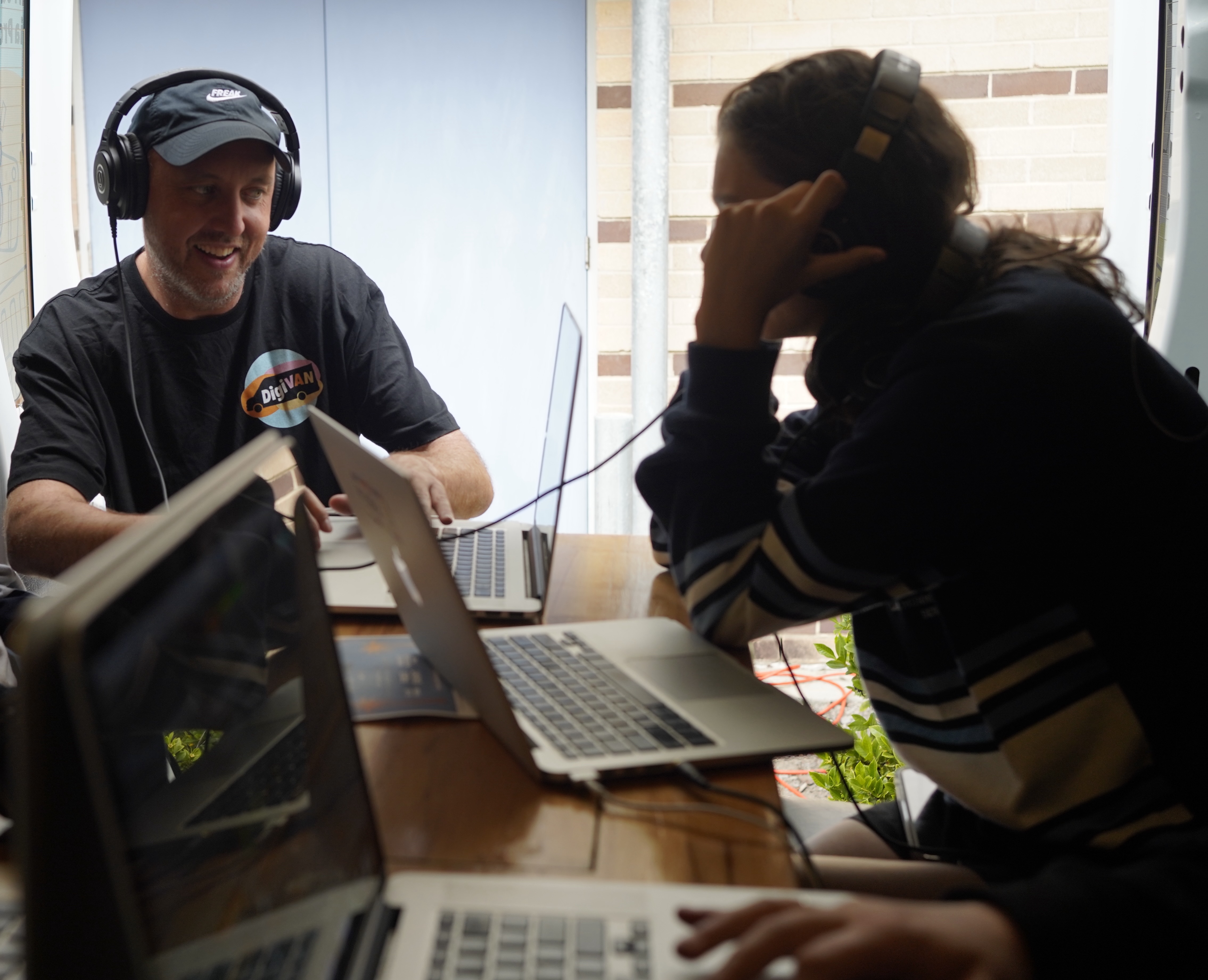
Student progress
Songwriting and student agency
Embedded is a strong sense of personal ownership and efficacy. Students choose their own projects, develop lyrics, record their parts, and make creative decisions: “I adapt based on each student’s level and interest. Some want to focus on beat-making, others on songwriting or production techniques… The environment is supportive, encouraging risk-taking and creativity without fear of judgment.”
Cody tells the story of how he approached working with a student who is autistic. He excitedly explains how this student, who struggles in other areas of their learning, makes music. “He will pencil in every beat, every note, every arpeggio, every synth,” with a level of detail unlike what is seen in other classes. “And just the focus they have and the way they colour-code things and the way everything's looped and in time to the grid — they really get it. And it's just exciting to watch.”
Another day, this student came to his session having written lyrics for a song they were working on. Cody suggested the student sing, which was met with a stare and refusal. “He's quite non-verbal, but has some really beautiful lyrics. They made me sing! So we had a bit of a stand-off,” he jokes. The result was an “80’s Springsteen Banger”. “They’re making creative decisions… shaping something that feels like their own.”
Cody ensures his own musical preferences don’t dictate the genres the students may make. “I make a real effort to understand where they're coming from or get them to show me…. even if it’s not my kind of music.” This openness to go along with what is happening in the room has led to some unexpected outcomes. Cody recalls a group of girls from a school in Western Sydney, from diverse cultural backgrounds including Syria, Jordan, and Ghana, who had never sung into a microphone before, working on an R&B track together.
One student jumped on the mic and improvised a voicemail-style intro saying, "Hey, it's me, I was just wondering… um… I thought you were gonna call me back?"I was like, "Oh my god, that's the whole concept of the song, this is brilliant. We used EQ Eight to make it sound like a telephone and added some vinyl crackle”, and the group decided to build the rest of the song around it."
Learning outcomes
Impacts reaching beyond the classroom
Cody encourages students not to focus on outcomes too early, but acknowledges the important role that sharing music plays in positive peer relationships. At one session, a student recounted to him a story of friends gathering around him in the park to listen to the beat he had made with Cody. He laughs, “That kid felt like the Dr Dre of their friendship group. How good’s that?” Cody is clear that not every student will become an artist, and that isn’t the goal. “I’m not trying to make superstar musicians… but it’s empowering”
For many, music simply becomes something they can return to. “Do it because you love it,” Cody says. “Because it's therapeutic. This can be something you do your whole life. You just need headphones and a laptop that can run Ableton.” But Cody doesn’t describe himself as a counsellor or therapist. “I'm just the music guy,” he insists, but within learning environments where young people often feel unheard, SongLab is providing opportunities for impactful self-expression.
_
Photos courtesy of 'Skilled Creative'
At a glance
Cody Dillon runs SongLab and works with young people in settings where school has not always worked for them. Many arrive disengaged, anxious, or unsure how to take part. His response is to keep sessions simple, hands-on, and led by student taste, so they can make something quickly and feel ownership. Ableton Live is being used by students turning ideas into a beat, a verse, or a finished track. The outcome he looks for is growth in confidence, self-efficacy and a reason to come back.
