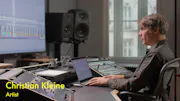
Manuel Poletti - Low-Frequency Oscillators (LFOs)

Composer and Max for Live programmer extraordinaire Manuel Poletti developed some of the commonly requested features and devices included in the latest release of Max for Live, including LFOs.
Manuel Poletti exerts his creative talents in many areas: musician, composer and performer, to name a few. In 1995, Manuel started working with Max as his primary music software tool. Since then, he has established himself as one of the world's premiere Max/MSP (and now, Max for Live) programmers. On top of developing for Max for Live, Manuel, who calls himself a "computer music designer," dabbles in music, sound design, in addition to multimedia and theater performance.
Manuel built many of the devices that are included in the latest release of Max for Live, such as the much requested LFOs. Manuel's efforts are part of a larger collection of over 100 devices that are included in the built-in Max for Live library.
New Max for Live LFO Devices
LFOs are included in the new devices that come with the latest Max for Live update. These are installed automatically with Max for Live, and do not need to be separately downloaded.
LFOs
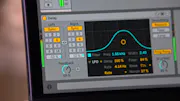
One of the new devices is the Ctrl1LFO, which applies a low-frequency oscillator to a device parameter or control in your Live Set. You can switch between six different waveforms, and use either Hertz or tempo-synced values.

Using the LFOs
The choosers at the right of the device allow you to map the LFO to a target parameter. You can select devices and parameters from the lists, or click the Map button for easy one-click mapping. With Live's transport running, the LFO will then change the value of the assigned parameter over time.
Additional new devices allow you to draw your own waveform type, or modulate parameters based on incoming audio signals, generated rhythms and more.
For a fuller rundown of the new devices and features in the latest version of Max for Live library, check out the What Comes with Max for Live page.